Tucson Shows Highlight Economic Headwinds, Shifting Gemstone and Diamond Markets
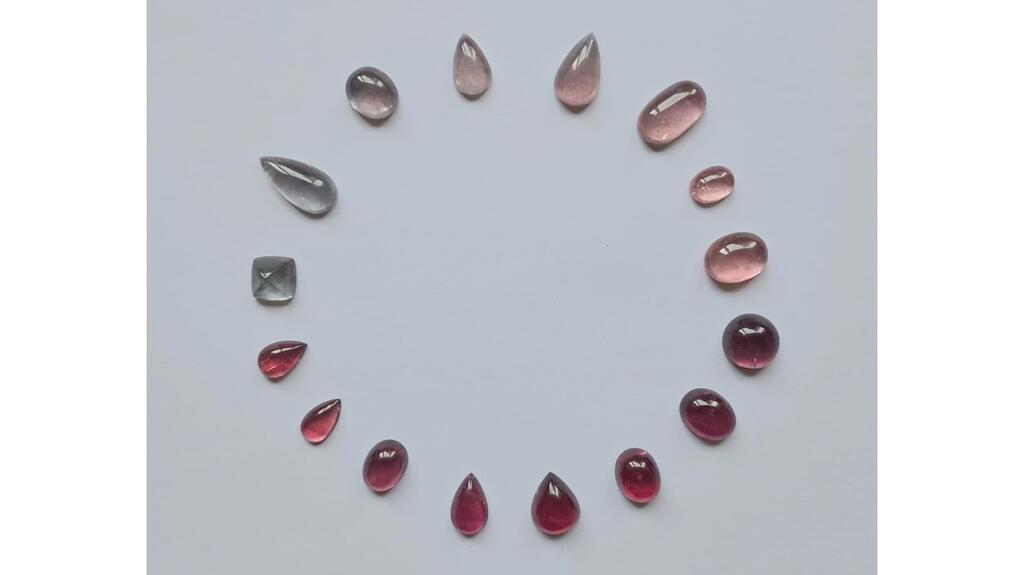
The recent AGTA Gemfair and GJX shows in Tucson provided a snapshot of the jewelry industry navigating complex economic factors, from fluctuating metal prices and tariffs to evolving consumer demand for colored gemstones and diamonds.
Economic Pressures Shape the Market
Stuart Robertson, president of Gemworld, and Brecken Branstrator, editor-in-chief of GemGuide, opened their market overview at AGTA Gemfair with a somber assessment of the economic climate. Robertson highlighted a significant drop in consumer confidence, reaching its lowest point since 2014, which directly impacts independent jewelers, the backbone of the U.S. jewelry market. He noted that high prices for essential goods leave consumers with less discretionary income for non-essential items like jewelry. This has led to a polarization in the market, with strength primarily seen at the very high end and the low end, while the middle market remains stagnant.
Tariffs also emerged as a significant concern. A study by the Kiel Institute for the World Economy indicated that U.S. consumers bear 96 percent of the tariffs collected by the U.S. government. Robertson observed that dealers who brought goods into the U.S. on a carnet—an international customs document allowing temporary export/import without immediate duty payment—faced considerable difficulties. These goods could not be sold and delivered on the spot; they required export and re-import with tariffs paid, effectively killing deals. This was particularly evident for dealers from countries like Brazil (50 percent tariff), Sri Lanka (20 percent tariff), and India (50 percent tariff, with a trade deal pending). Robertson emphasized that these tariffs are impacting U.S. dealers and consumers, not necessarily the suppliers who can shift demand to other markets.
The price of precious metals has also seen dramatic increases, with gold doubling and silver tripling in price compared to the previous year. This surge is attributed to investors seeking metals as a hedge against perceived economic chaos, rather than demand from the jewelry industry. Robertson expressed concern for the middle market, as the high-end segment continues to purchase solid gold and expensive pieces. Designers are responding by using alternative metals like titanium and steel for high-quality gemstones, or by creating lightweight gold pieces, though durability remains a concern.
Colored Gemstone Trends and Innovation
Despite the challenges, the colored gemstone market continues to evolve and gain market share. Younger generations have a broader definition of fine jewelry, driving demand for unique pieces. Robertson noted the growing trend of storytelling marketing, where origin and sourcing processes are highlighted, appealing to consumers who want to support mining communities.
Branstrator observed a highly varied buying landscape as consumers seek color substitutions and more affordable options. Materials like titanium, porcelain, ceramic, leather, and wood are appearing in designer collections, sometimes as a way to reduce gold usage or to enable artistic innovation, as seen in Marla Aaron's collaboration with Nymphenburg Porcelain. Opaque and hard stones are being used for inlay styles and watch faces.
In faceted stones, vibrant, large, and elongated shapes are popular. Zircon, especially in orange and brown tones, is performing well due to its favorable pricing. Garnet, particularly in orange, also shows strong demand. While demand for tourmaline has dipped, there is still interest in Brazilian material, though fine stones are scarce. Peridot, citrine, and amethyst are also selling well. Colored gemstones are increasingly being chosen for bridal jewelry, with sapphire and emerald remaining top choices, alongside Montana sapphires, zircon, spinel, and garnets. Buyers are prioritizing unique designs and stories over price for bridal pieces.
Estate and antique jewelry are also experiencing a surge in popularity, driven by a desire for unique pieces, potential sourcing of stones or metals at more affordable price points, and the opportunity to attract a different customer base.
The mining landscape remains dynamic, with fewer major new discoveries. However, artificial intelligence is advancing gemstone tracing and origin determination. Rising labor costs and local unrest in mining areas are impacting supply and pushing prices higher. Large-scale mining operations are becoming more efficient, but their output, often introduced through invitation-only auctions, directly correlates with higher prices, making materials like ruby accessible only to the high-end market.
Diamond Market Uncertainty and De Beers' Future
The diamond market is facing significant challenges, with De Beers’ parent company, Anglo American, writing down De Beers’ book value by $2.3 billion, halving its valuation. This strategic move is seen as an effort to offload the asset, with potential buyers including Botswana, Angola, and Namibia. The decline in De Beers' value is attributed to the erosion of natural diamond market share in the U.S. due to the rise of lab-grown diamonds, a struggling China market, and general market uncertainty.
Tariffs also played a role, with the Supreme Court striking down previous tariffs enacted under the International Emergency Economic Powers Act (IEEPA). While new tariffs were introduced under a different act, capped at 150 days and 15 percent, the removal of duty-free provisions for natural diamonds and gemstones from countries with trade agreements, like the EU and potentially India, has introduced a 10 percent tariff, impacting the market.
The diamond industry is described as psychologically driven, susceptible to the 'bullwhip effect' where minor shifts in demand can amplify through the supply chain. Despite the challenges, some high-end jewelers report booming bridal business fueled by a consumer backlash against the perceived 'same-same' look of lab-grown diamonds, with some clients specifically seeking natural diamonds for their symbolism and perceived value. Conversely, data from The Knot shows that 61% of couples chose lab-grown diamonds as their center stone. This dichotomy is partly explained by the 'K-shaped economy,' where the wealthy opt for natural diamonds while others prioritize the larger look of lab-grown diamonds.
The future of the diamond market remains uncertain, with expectations that the sale of De Beers and stabilization of the market will be crucial. The industry faces an 'existential crisis,' with significant implications for mining countries reliant on natural diamond revenue.
Sources
- —
- —