Tom Moses Concludes Nearly 50-Year Career at GIA, Reflects on Legacy
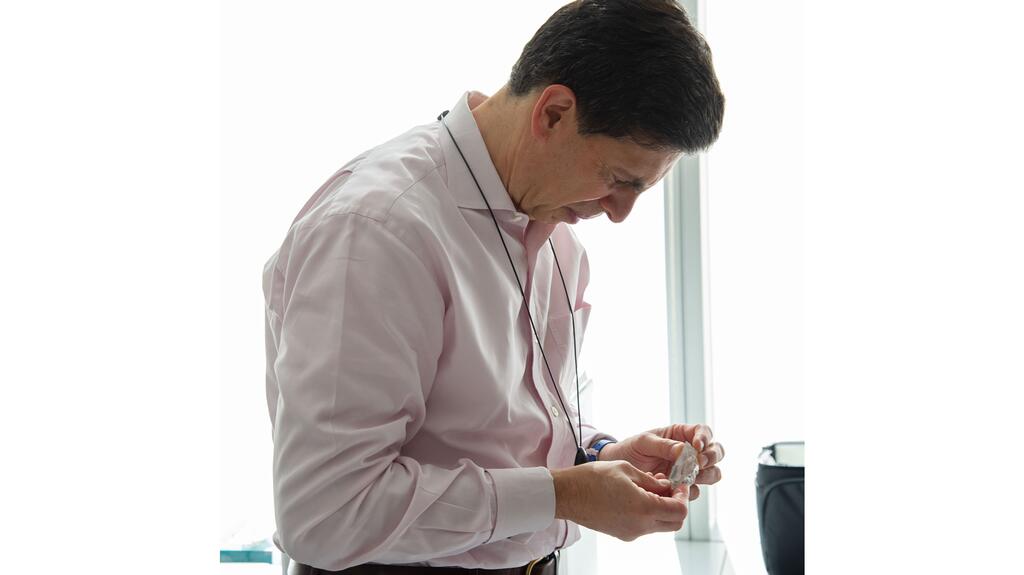
Tom Moses, a towering figure in the gemological world and GIA’s executive vice president and chief research and laboratory officer, is set to conclude his nearly five-decade tenure at the Gemological Institute of America (GIA) this May. Reflecting on a career deeply rooted in his family’s jewelry business and ignited by a passion for gemstones, Moses is stepping down not into retirement, but into a new chapter filled with continued curiosity and learning.
From Family Business to Gemological Institute
Moses’ journey into gemology began in his youth, working in his family’s jewelry store in Western Pennsylvania. His father, Merril Moses, a World War II veteran, attended watchmaking school on the G.I. Bill and established a jewelry business. Young Tom, like many in family enterprises, was enlisted for various tasks, from cleaning display cases to learning engraving and repair. His fascination with gemstones grew through reading GIA’s Gems & Gemology, particularly the early 'Notes from New York' section, which detailed the science behind gems.
After attending college, Moses pursued his gemological education at GIA in Santa Monica, California, earning his Graduate Gemologist diploma in 1976. He then embarked on a path that saw him alternating between GIA’s labs and the family business for about a decade. In 1986, he made the pivotal decision to join the GIA lab in New York full-time, working under the mentorship of G. Robert Crowningshield, a legend in the field.
“That kind of started the journey. It was a great opportunity to learn and be mentored,” Moses recalled. Over his approximately 45 years at GIA, Moses has held numerous roles, including grading pearls and gaining expertise in various areas of gem identification.
A Career Defined by Passion and Mentorship
Despite achieving significant accolades, including the Richard T. Liddicoat Award for Distinguished Achievement and a position on the GIA Board of Governors, Moses often expressed a feeling of not having accomplished enough. He attributes this sentiment to the profound impact of his mentors, Richard T. Liddicoat and G. Robert Crowningshield, whom he considered ‘Renaissance men’ with a profound vision for the field.
“My mentors were just so good; they were just incredible. I had hoped to get to that level and I just didn’t,” he stated, a humble perspective from someone with over 100 technical articles to his name. Moses’ desire to delve deeper into writing and research was often balanced by his involvement in the business side of GIA’s operations, particularly its international expansion. Between 2005 and 2010, GIA opened approximately half a dozen laboratories overseas, a period that required significant focus and time, drawing him away from his core passion for gemology.
“It takes me to a peaceful place where I can focus on the gemstones. I’m still as fascinated [by gemstones] as I was 50 years ago, which is a lucky feeling,” Moses said, referring to the time spent with his microscope, an instrument he hopes to keep even after leaving GIA.
Notable Examinations and the Future of Lab-Grown Diamonds
Throughout his career, Moses has had the opportunity to examine some of the world’s most extraordinary gems. Among them, he fondly remembers the ‘La Peregrina’ pearl, once part of Elizabeth Taylor’s collection, noting its surface scratches which he believes may have been caused by her dog. He also examined the 2,488-carat ‘Motswedi’ diamond, one of the largest rough diamonds ever discovered, describing it as an “incredible diamond” that weighed more than a pound.
Moses also shared his insights on the evolving landscape of lab-grown diamonds. While he doesn’t believe an undetectable, commercially grown diamond is likely due to the inherent differences in growth processes compared to natural diamonds, he acknowledges that post-growth treatments are making detection more challenging. He noted that a significant percentage of white, near-colorless Type IIa diamonds are synthetic, serving as a key indicator for detection. With the production of lab-grown diamonds reaching tens of millions of carats annually, Moses stressed the increasing importance of GIA’s accurate screening and grading reports to ensure consumer trust.
Transition and Looking Ahead
Moses began discussing his transition with the GIA Board of Governors a couple of years ago, aiming to leave on his own terms. He recalled advice from GIA founder Robert Shipley about stepping down before being prompted. “I don’t ever want to be in a situation where someone really kind of reminds you, it’s time to go,” he said.
While he has no immediate plans, Moses intends to continue working, finding it difficult to transition “cold turkey” from a career that has always fueled his curiosity. He plans to take a brief period away before deciding on his next steps, emphasizing that he still has “a little fuel in the tank” and much more to learn in the world of gemology. His departure marks the end of an era for GIA, leaving a void that his extensive knowledge and dedication have long filled.
Sources
- —
- —
- —