Jewelers Rethink Mother's Day Marketing with Empathetic Opt-Out Options
Shifting Sentiments Around a Sensitive Holiday
Mother’s Day, a holiday often associated with sentimental gifts and familial celebration, is increasingly being recognized as a complex and emotionally charged occasion for many. In response, a growing number of jewelry retailers and designers are adopting more sensitive marketing approaches, including offering customers the option to opt out of Mother’s Day-specific email communications. This shift acknowledges that for some, the holiday can evoke feelings of loss, grief, estrangement, or struggles with infertility and pregnancy.
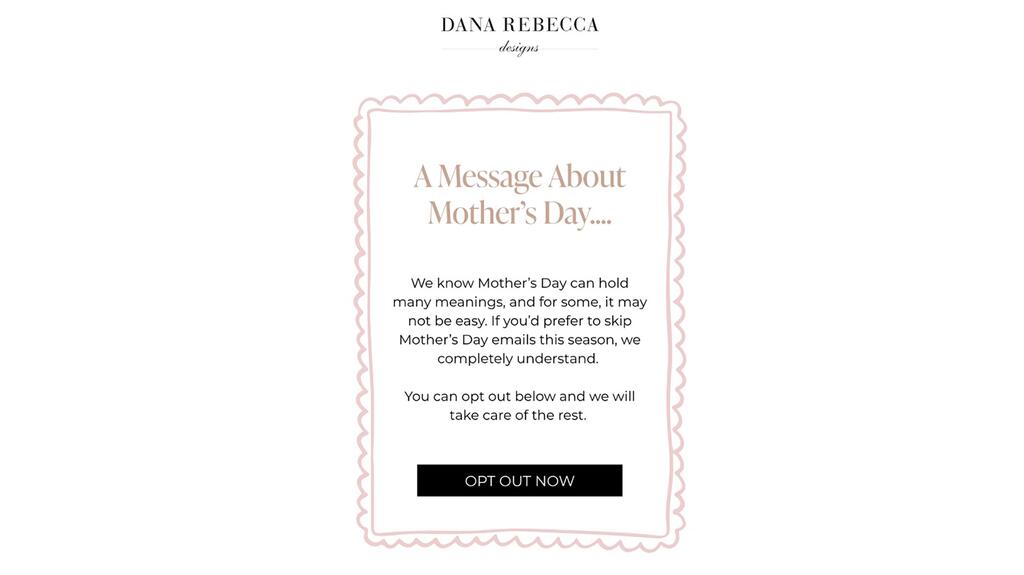
Dana Gordon, owner of Dana Rebecca Designs, was an early adopter of this practice, implementing opt-out emails for Mother’s Day about five years ago. ‘I think it’s a holiday that’s really emotional for a lot of people. There’s loss associated [with it]. There’s estrangement from family members. And then there’s a greater conversation today about pregnancy and infertility,’ Gordon explained. Her company’s approach allows customers to unsubscribe from only Mother’s Day-themed promotions, not all marketing, thereby showing empathy and aiming to retain customers who might otherwise unsubscribe entirely.
Gordon noted that customers have expressed gratitude for this option, with many sharing that they didn’t realize how much they needed it until it was offered. ‘We continue to see people in different stages of life say, ‘I didn’t realize how much that message was going to hit me as being important,’’ she said. ‘We just see more emotions being shared and people are much more vulnerable today. It just lends itself to understanding as a community and that we can be supportive of one another.’
Industry Embraces Empathetic Messaging
The sentiment is echoed by industry observers like David Turgeon, executive vice president of client services at Fruchtman Marketing. He has witnessed a significant evolution in Mother’s Day messaging within the jewelry sector over the past decade. ‘It’s now kind of shifting to messaging that’s more about honoring that special woman in your life or that special nurturing figure,’ Turgeon stated. He recalled his own experience with mixed emotions following his mother’s passing, emphasizing that the holiday can be an opportunity to celebrate meaningful relationships.
Turgeon advises jewelers to ‘read the room’ and understand their specific market. ‘Every retailer knows their customers best, so making a blanket statement [about what they should do] is difficult. A retailer in a particular market may feel that their customers may have a greater sensitivity. Others not so much,’ he said. He believes the most effective Mother’s Day campaigns blend the emotional resonance of the holiday with product highlights, creating an authentic and memorable customer experience.
Other notable brands, including Tiffany & Co., Etsy, and Greenwich St. Jewelers, have also implemented similar opt-out options, signaling a broader industry trend toward greater customer consideration.
Preference Centers: A Sustainable Solution
While dedicated opt-out emails were initially praised, some marketing experts suggest that a more integrated approach might be more effective and less intrusive. Jessica Brick, Campaign Manager at Spotler UK, points out that the proliferation of opt-out emails can inadvertently lead to an overwhelming volume of communications, defeating the original purpose.
‘Marketers, in their attempt to show empathy, ended up overwhelming customers with repeated reminders of an occasion they were trying to avoid, unintentionally causing more harm than good,’ Brick noted. She advocates for the implementation of comprehensive email preference centers. These centers allow subscribers to proactively manage their communication preferences year-round, including opting out of specific occasion-based messaging.
‘The best approach is to integrate a preference centre within your email marketing strategy,’ Brick advised. ‘Within the preference centre should be a section dedicated to opting out, allowing customers to opt-out of certain occasions messaging at any time. This avoids the need for separate opt-out emails, reducing inbox clutter and minimising distress.’ The ideal time to encourage customers to set their preferences is during the initial subscription process or welcome journey.
Beyond Opt-Outs: Inclusive Marketing
Beyond opt-out mechanisms, some companies are exploring more inclusive marketing strategies. The women’s social network Peanut, for instance, has used billboard campaigns with messages like ‘To the women lost in the trenches of postpartum, you’re not alone’ and ‘To the woman fighting back tears when she walks past the baby aisle, you’re not alone.’ These campaigns aim to connect with individuals experiencing the more challenging aspects of motherhood and related life events.
Carrie Mccoll, a member of Counselling Directory, highlights that special occasions can amplify feelings of absence or exclusion. ‘Brands make sales by offering an aspirational lifestyle so these emails highlight what is missing,’ she explained. However, she also notes that the opt-out choice can offer a sense of control. Mccoll also cautions that while opt-out emails can stem from good intentions, they can also be perceived as a form of virtue signaling in a society that values public displays of ethical behavior.
The consensus among consumers and marketers alike is that empathy, customer control, and genuine understanding are paramount. As Laura Woods, a publicist who experienced grief after her mother’s death, suggested, preferences should ideally be established at the point of purchase rather than through repeated, potentially triggering, opt-out reminders closer to the event. This approach ensures that marketing efforts remain sensitive, relevant, and respectful of diverse customer experiences.
Sources
- —
- —
- —