Milano Cortina 2026 Medals: A Symbol of Unity and Sustainability
A Design Rooted in Two Cities, One Spirit
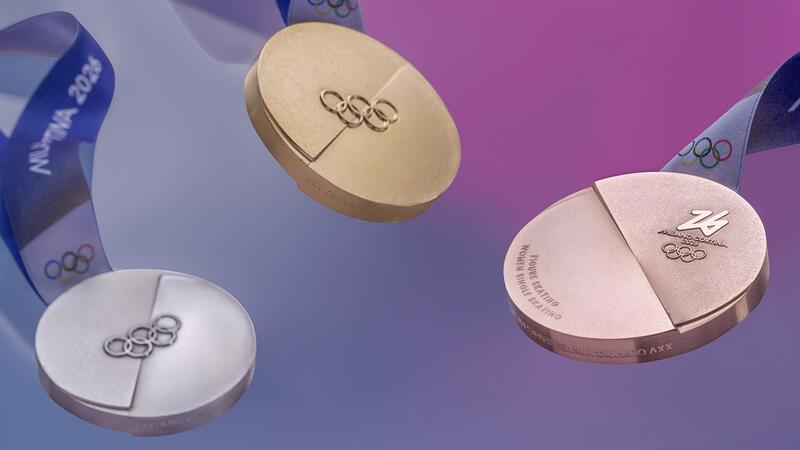
The medals for the 2026 Olympic and Paralympic Winter Games in Milano Cortina, Italy, are a profound reflection of their unique dual-city hosting arrangement. For the first time, the Games will span two locations—Milano and Cortina—a concept that inspired the design team, led by Raffaella Paniè, Director of Brand, Identity, and Look of the Games for Milano Cortina 2026. The medals are intentionally crafted as two halves, each with distinct textures, symbolizing the union of these two cities.
This design extends beyond geographical representation, serving as a metaphor for teamwork and the emotional core of competition. As Paniè explained, It represents purity and a return to essence. With our medals, we celebrate the strength found in difference: two unique halves that join through the Olympic and Paralympic symbols to deliver a bold and unified message. The design also incorporates Braille markings on the Paralympic medals, enabling visually impaired athletes to identify their sports.
Craftsmanship and Sustainability at the Forefront
The intricate medals were produced by Istituto Poligrafico e Zecca dello Stato (IPZS), the Italian state printer and mint. A significant aspect of their creation is the commitment to sustainability. These medals are the first in Olympic history to be made from recycled metal, and the manufacturing process utilizes a heating furnace powered entirely by renewable energy. Furthermore, IPZS applied an eco-friendly, non-toxic, and recyclable protective finish to the medals.
The design itself is described as vibrant, dynamic, and contemporary, drawing inspiration from Italian avant-garde. It embodies the determination and passion of the athletes while celebrating the Olympic and Paralympic spirits. The contrast between a granular texture and a mirrored surface on the medals highlights the union and movement, turning contrast into unity and motion into meaning.
Material Value and Historic Context
Each medal is substantial in weight and composition. The gold medal, weighing 506 grams, consists of a 500-gram pure silver body plated with 6 grams of pure gold. The silver medal is made of 500 grams of pure silver, and the bronze medal is crafted from 420 grams of copper. All medals measure 80 millimeters in width and 10 millimeters in thickness.
Recent fluctuations in precious metal prices have notably increased the value of the medals. The gold medal for the Milano Cortina Games is estimated to be worth approximately $2,300, more than double that of the 2024 Paris Olympics. The silver medal is valued at around $1,400, and the bronze medal at approximately $5.60.
A total of 1,146 gold, silver, and bronze medals will be awarded across both the Olympic and Paralympic Winter Games. The boxes and trays for these medals are being created by Versalis, a subsidiary of Italian energy company Eni, an official supporter of the Games also involved in crafting the Olympic and Paralympic torches.
A Return to Italy's Olympic Heritage
The 2026 Games mark a significant return to Italy's Olympic hosting legacy. While this is the first time the Olympic Games will be jointly hosted by two cities, Italy has a rich history with the Olympics. Rome hosted the Summer Olympics in 1960, and Cortina itself previously hosted the Winter Olympics in 1956. The 2026 Games signify a return to Cortina after 70 years, building on the nation's Olympic experience, which also includes the Turin Winter Olympics in 2006.
Giovanni Malagò, president of the Milano Cortina 2026 Foundation, emphasized the medals’ significance: The medals of Milano Cortina 2026 are much more than mere awards: they are the heartbeat of Italy, the essence of a design that moves, the reflection of a dream taking shape. They encapsulate the identity of a country—its creativity, its passion for sports and beauty. Each medal, whether Olympic or Paralympic, is a story etched into metal: it speaks to effort, determination, sacrifice, and the hopes of those who have lived to reach the podium.
Sources
- —
- —
- —