Turquoise: A Timeless Gemstone in Jewelry
Turquoise is a captivating opaque gemstone renowned for its unique blue-to-green hues and rich historical significance. In the world of fine jewelry, turquoise is cherished for its distinctive color, often associated with protection, healing, and good fortune. Its earthy yet vibrant tones make it a versatile choice for a wide range of jewelry styles, from ancient artifacts to contemporary designs.
Key Features
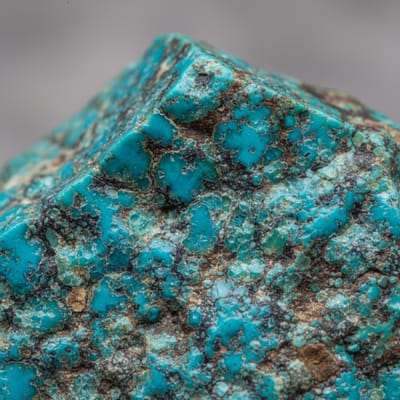
Turquoise is a hydrated phosphate of copper and aluminum. Its most striking characteristic is its color, which can range from sky blue to a greenish-blue, often with a matrix – natural veins of host rock that can appear as black, brown, or grey lines running through the stone. The presence and pattern of this matrix significantly influence the stone's appearance and value.
Color: The most desirable turquoise color is a pure, intense robin's egg blue, often referred to as 'Persian blue', which typically has little to no matrix. However, shades of blue-green and green are also highly valued, especially when they possess a desirable vibrancy. The color is caused by the presence of copper (for blue) and iron (for green).
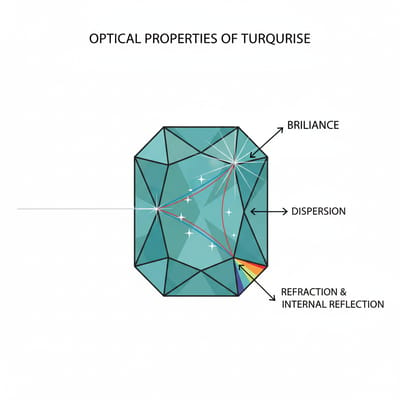
Luster: Turquoise typically has a waxy to dull luster. When polished, it can achieve a vitreous (glass-like) shine, but it is not inherently reflective like many other gemstones.
Hardness: On the Mohs scale of hardness, turquoise ranks between 5 and 6. This makes it moderately durable but susceptible to scratches and abrasions from harder materials. It requires careful wear and protective settings.
Transparency: Turquoise is an opaque gemstone, meaning light does not pass through it.
Matrix: The matrix is the host rock surrounding the turquoise deposit. It can be a defining feature, adding character and uniqueness to each stone. Fine, web-like matrices are often prized, while chunky or irregular matrices may be less desirable, depending on aesthetic preference.
Origin and History
The history of turquoise in jewelry spans thousands of years and crosses numerous cultures. Ancient Egyptians were among the first to mine and use turquoise, incorporating it into elaborate jewelry and amulets found in royal tombs. The gemstone was highly prized by the ancient Persians, who believed it offered protection against the evil eye and wore it as talismans. They also used it to adorn their horses' bridles, hence the name 'Persian blue'.
Native American cultures, particularly the Navajo, Zuni, and Pueblo peoples of the Southwestern United States, have a deep spiritual and cultural connection with turquoise. For centuries, they have mined and crafted exquisite turquoise jewelry, viewing it as a sacred stone symbolizing the sky, water, and life itself. Their intricate silverwork often complements the natural beauty of turquoise.
Turquoise has also been found in ancient Tibetan, Chinese, and South American civilizations, highlighting its global appeal and historical importance.
Types / Variations
While the primary variation in turquoise is its color and matrix, some regional types are particularly recognized:
- Persian Turquoise: Highly prized for its intense, even blue color with little to no matrix. This refers to turquoise historically sourced from Iran (formerly Persia).
- American Turquoise: Sourced from mines in Arizona, Nevada, and New Mexico, this turquoise often exhibits a wider range of colors, from deep blues to vibrant greens, and frequently features distinct matrices. Notable American turquoise varieties include Kingman, Lander, Bisbee, and Sleeping Beauty.
- Tibetan Turquoise: Often characterized by a more greenish hue and a darker, web-like matrix.
- Egyptian Turquoise: Historically significant, often showing a greenish-blue color.
The term 'stabilized' versus 'natural' turquoise is also a significant variation to understand.
How It's Made
Turquoise is a naturally occurring mineraloid, formed over millions of years in arid regions through the slow deposition of minerals from water trickling through porous rock. It is typically found in nodular masses or as thin veins within host rocks like sandstone, shale, or volcanic rock.
Stabilization: Because turquoise is relatively soft and porous, it can be easily damaged, absorb oils and cosmetics, and lose its color over time. To enhance its durability and improve its appearance, much of the turquoise on the market is 'stabilized'. This process involves impregnating the stone with a clear, stable plastic resin under vacuum. Stabilization makes the turquoise less porous, harder, and more resistant to discoloration, ensuring it holds up better in jewelry.
Reconstituted Turquoise: This is made from turquoise powder and chips mixed with a binding agent. It is not a natural stone but a composite material. While it can mimic the look of natural turquoise, it is generally considered less valuable.
Grading & Quality Standards
Unlike diamonds, there is no universally recognized, standardized grading system for turquoise analogous to the 4Cs (color, clarity, cut, carat). However, several factors are considered when assessing its quality and value:
- Color: The most important factor. A pure, vibrant, evenly distributed blue is generally most desirable.
- Matrix: The pattern and color of the matrix play a crucial role. A fine, intricate, spiderweb matrix can add significant beauty and value. Solid black or brown matrices are often preferred over chalky or crumbly ones.
- Origin: Certain origins, like classic Persian blue, command higher prices due to historical reputation and desirable color.
- Treatment: Natural, untreated turquoise is the rarest and most valuable. Stabilized turquoise is common and acceptable, but its value is lower than natural. Impregnation with resin is the most common stabilization method. Other treatments, like dyeing, are less desirable and should be disclosed.
- Hardness and Density: Denser, harder stones indicate better quality.
- Homogeneity: A uniform color and texture throughout the stone are generally preferred, unless the matrix is a desirable feature.
Buying Guide
When purchasing turquoise jewelry, consider the following:
Color and Matrix: Decide whether you prefer a vibrant blue, a green hue, or a combination. Consider if you are drawn to stones with or without a matrix, and if so, what kind of matrix pattern appeals to you.
Origin: If a specific origin's characteristics are important to you (e.g., the intense blue of Persian turquoise or the varied matrix patterns of American turquoise), research stones from those regions.
Treatment: Understand whether the turquoise is natural, stabilized, or treated in other ways. Reputable jewelers will disclose this information. Natural, untreated turquoise is the most valuable but also the rarest and most expensive.
Setting: Turquoise's moderate hardness means it benefits from protective settings. Bezel settings, which fully enclose the stone's edges, are ideal. Avoid prong settings for rings unless the stone is well-protected.
Craftsmanship: For Native American jewelry, look for authentic pieces with fine silversmithing. Examine the details of the metalwork and how the turquoise is set.
Trustworthy Seller: Purchase from reputable jewelers or dealers who provide clear information about the stone's origin, treatments, and quality.
Price Range & Value Factors
The price of turquoise jewelry can vary significantly, from affordable pieces to high-end collector's items. Key value factors include:
- Color: Intense, pure blue or vibrant green colors command higher prices.
- Matrix: A desirable, intricate matrix can increase value. Chalky or irregular matrix decreases it.
- Origin: Historically significant or rare origins like true Persian blue turquoise can be very expensive.
- Natural vs. Treated: Natural, untreated turquoise is the most valuable. Stabilized turquoise is significantly less expensive but more practical for everyday wear. Reconstituted or dyed turquoise is the least valuable.
- Size and Carat Weight: Larger stones naturally cost more, but quality factors are paramount.
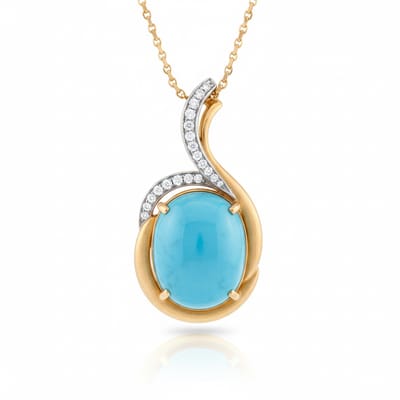
- Cut and Polish: Well-cut and polished stones are more desirable. Cabochon cuts (smooth, rounded tops) are most common for turquoise.
- Setting and Craftsmanship: The quality of the metalwork, especially in artisanal pieces like Native American jewelry, significantly impacts the overall price.
While fine, natural turquoise can be quite valuable, especially stones with exceptional color and matrix, much of the turquoise available today is stabilized, making it accessible for a wide range of budgets.
Care and Maintenance
Due to its relative softness and porosity, turquoise requires careful handling:
- Avoid Harsh Chemicals: Keep turquoise away from perfumes, cosmetics, soaps, detergents, and household cleaners. These can be absorbed by the stone, causing discoloration or dulling its finish.
- Remove Before Activities: Take off turquoise jewelry before swimming, exercising, doing chores, or any activity where it might be exposed to chemicals, excessive sweat, or physical impact.
- Wipe Gently: Clean turquoise with a soft, damp cloth. Avoid abrasive materials. For stabilized turquoise, a slightly damp cloth is usually sufficient. For natural, untreated turquoise, use extreme caution and only wipe with a dry, soft cloth.
- Storage: Store turquoise jewelry separately from other jewelry to prevent scratching. Use a soft pouch or a lined jewelry box.
- Avoid Heat and Sunlight: Prolonged exposure to direct sunlight or high heat can cause turquoise to fade or crack.
Pros and Cons
Pros:
- Unique Beauty: Distinctive color palette and matrix patterns make each piece unique.
- Historical and Cultural Significance: Rich history and association with protection and good fortune.
- Versatility: Complements a wide range of styles, from bohemian to classic.
- Affordability (often): Stabilized turquoise offers beautiful color at accessible price points.
Cons:
- Durability: Relatively soft (5-6 Mohs), prone to scratching and chipping.
- Porosity: Can absorb oils and chemicals, leading to discoloration if not cared for properly.
- Treatment Commonality: Much of the market consists of stabilized or treated stones, which are less valuable than natural.
- Color Fade: Natural, untreated turquoise can fade over time with exposure to light and oils.
Famous Examples
Turquoise has adorned royalty and been a central element in significant jewelry pieces throughout history. While specific auction records for individual turquoise stones are less common than for diamonds or colored gemstones, its presence in historical regalia and iconic pieces is notable.
One of the most famous historical uses is in ancient Egyptian jewelry, such as the pectoral of Tutankhamun, which features intricate inlays of turquoise, lapis lazuli, and carnelian. The deep blue of the turquoise was highly prized.
Native American turquoise jewelry, particularly pieces made by master silversmiths from the Navajo and Zuni tribes, are highly sought after by collectors. These often feature large, striking turquoise stones set in elaborate silverwork, showcasing the natural beauty of stones like Kingman or Bisbee turquoise.
While not a single famous gem, the extensive use of turquoise in Native American art and jewelry represents its cultural importance and enduring appeal.
Common Misconceptions
- All Turquoise is Blue: Turquoise occurs in a range of blues, greens, and even yellowish-green shades. The desirable 'Persian blue' is specific, but other beautiful colors exist.
- Matrix is Always Bad: While chalky or undesirable matrices can lower value, intricate, spiderweb matrices are often highly prized and can significantly increase a stone's beauty and worth.
- Stabilized Turquoise is Fake: Stabilization is a common and accepted treatment to improve durability. It's not the same as reconstituted or dyed material, though it does affect value compared to natural, untreated turquoise.
- Turquoise is Extremely Valuable: While rare, natural, untreated turquoise of exceptional quality can be very valuable, but most turquoise jewelry on the market is stabilized and thus more affordable.
Related Terms
- Matrix
- Cabochon
- Stabilized Turquoise
- Persian Blue
- Mohs Scale
- Opaque Gemstone
- Native American Jewelry
- Kingman Turquoise
- Bisbee Turquoise
- Sleeping Beauty Turquoise
FAQs
What is the most valuable type of turquoise?
The most valuable turquoise is typically natural (untreated), with a pure, intense robin's egg blue color, little to no matrix, and from a historically significant origin like Persian mines.
Is stabilized turquoise worth less than natural turquoise?
Yes, natural, untreated turquoise is significantly more valuable than stabilized turquoise due to its rarity. However, stabilization is a common and accepted practice that makes turquoise more durable and accessible.
Can turquoise jewelry be worn every day?
Stabilized turquoise can be worn daily with care, as the resin impregnation increases its durability and resistance to damage. However, it's always best to remove jewelry during strenuous activities, while cleaning, or when exposed to chemicals.
How can I tell if turquoise is real?
Real turquoise will have a unique color and often a matrix. It will feel cool to the touch. If it feels unusually light, has a perfectly uniform color with no matrix, or has a plastic-like appearance, it might be reconstituted or imitation. Purchasing from a reputable dealer who discloses treatments is the best way to ensure authenticity.
Why does turquoise change color?
Natural, untreated turquoise can change color or become dull if it absorbs oils, cosmetics, or chemicals, or if it is exposed to prolonged sunlight or heat. This is why proper care and avoiding certain exposures are crucial.