Tourmaline: A Dazzling Spectrum of Color in Fine Jewelry
Tourmaline is a captivating gemstone celebrated for its extraordinary range of colors and its suitability for a wide array of jewelry designs. From vibrant pinks and fiery reds to deep blues and lush greens, tourmaline offers a unique and accessible option for those seeking beautiful, durable, and multifaceted gems.
Key Features
The most striking characteristic of tourmaline is its remarkable color diversity. This phenomenon is due to the presence of various trace elements within its crystal structure. No two tourmaline crystals are exactly alike, making each stone unique.
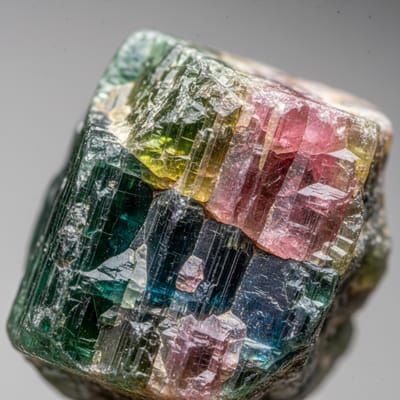
- Color Variety: Tourmaline occurs in virtually every color of the rainbow, including pink, red (rubellite), green (verdelite), blue (indicolite), yellow, brown, black, and colorless. Some stones exhibit multiple colors within a single crystal, known as multicolor or parti-colored tourmaline.
- Pleochroism: Many tourmalines display pleochroism, meaning they show different colors or intensities of color when viewed from different angles. This can be a desirable trait, enhancing a stone's depth and complexity.
- Durability: With a Mohs hardness of 7 to 7.5, tourmaline is a reasonably durable gemstone, making it suitable for everyday wear in rings, pendants, earrings, and bracelets.
- Clarity: Tourmaline can be found with excellent clarity, though inclusions are not uncommon. High-quality stones are transparent with few visible imperfections.
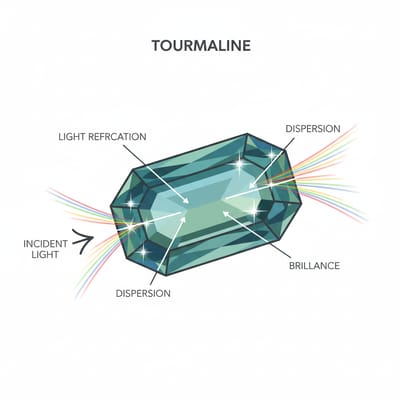
- Luster: When cut and polished, tourmaline exhibits a vitreous (glassy) luster, which gives it a beautiful sparkle.
Origin and History
The name tourmaline is derived from the Sinhalese words 'turu' and 'mali', meaning 'stone of mixed colors' or 'sparkling jewel'. While tourmaline has been known and used in jewelry for centuries, its distinct identity was not recognized by Western mineralogists until the 18th century. Before then, red tourmalines were often mistaken for rubies, and blue tourmalines for sapphires.
Significant deposits were discovered in Brazil in the 19th century, which brought the gemstone to greater prominence. Later, large finds in Africa and Asia further expanded its availability.
Types / Variations
Tourmaline's appeal lies in its vast spectrum of colors, with several varieties being particularly sought after in the jewelry market:
- Rubellite: This is the term for intensely colored pink to red tourmalines. The most valuable rubellites are those with pure, vibrant pink or red hues, free from brown or orange overtones.
- Indicolite: These are blue tourmalines, ranging from light sky blue to deep, intense blues. The most prized indicolites are cobalt-blue, though true cobalt-rich indicolites are very rare and command high prices.
- Verdelite: This variety encompasses green tourmalines. The color can range from a light, yellowish-green to a deep, emerald-like green. Chrome tourmaline, a rare and valuable type of green tourmaline, gets its color from chromium.
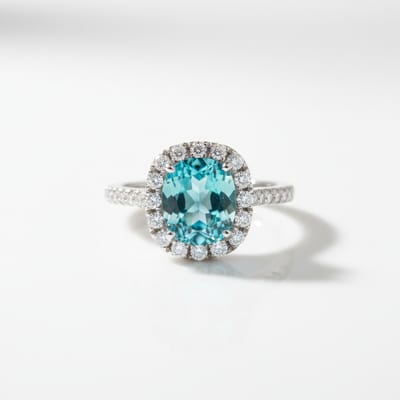
- Paraiba Tourmaline: Discovered relatively recently in the 1980s in Paraíba, Brazil, this is one of the most exotic and valuable tourmalines. It is characterized by its electrifying neon blues and greens, often with a turquoise or cyan hue, due to the presence of copper and manganese. Its rarity and intense color make it exceptionally prized.
- Watermelon Tourmaline: A fascinating type of tourmaline that exhibits distinct zones of color within a single crystal, typically pink in the center and green on the outside, resembling a slice of watermelon.
- Schorl: This is the black variety of tourmaline. While not typically used in fine jewelry due to its opaque nature and commonness, it is historically significant and possesses protective properties in some beliefs.
- Dravite: Brown tourmaline, often less desirable for jewelry unless it possesses unique color zoning or is part of a parti-colored stone.
- Achroite: The rare, colorless variety of tourmaline.
How It's Made
Tourmaline is a naturally occurring mineral, a complex borosilicate with a mixed crystal structure. Its formation occurs deep within the Earth's crust under specific geological conditions, typically in igneous and metamorphic rocks, often associated with granite pegmatites.
The gem-quality crystals form over millions of years as molten rock cools and solidifies, allowing elements like lithium, aluminum, iron, magnesium, and others to arrange themselves into the tourmaline structure. The trace elements present during this formation process are responsible for the gemstone's vibrant and varied colors.
While most tourmaline used in jewelry is natural, some treatments exist to improve color or clarity, though these are generally less common or intensive than treatments for other gemstones. Heat treatment can sometimes be used to enhance the color of certain tourmalines, particularly pink and red varieties. It is important for buyers to be aware if a stone has been treated.
Grading & Quality Standards
Like other precious gemstones, tourmaline quality is assessed based on the familiar '4 Cs': Color, Clarity, Cut, and Carat Weight. However, for tourmaline, Color is the most critical factor determining its value.
- Color: The most desirable colors are vivid, pure hues with good saturation. For rubellite, intense pink to red is preferred. For indicolite, rich blues are highly valued. For green tourmalines, vibrant, pure greens are sought after. Paraíba tourmaline's unique neon blues and greens are exceptionally valuable. Color zoning, especially in watermelon tourmalines, can be a desirable aesthetic feature.
- Clarity: Gem-quality tourmalines are typically transparent with minor inclusions. Eye-clean stones (inclusions not visible to the naked eye) are preferred. However, some inclusions that add to the stone's character, like dramatic color zoning or needle-like inclusions that create a cat's-eye effect, can be acceptable or even enhance uniqueness.
- Cut: Tourmaline is cut into a wide variety of shapes and facets to maximize its color and brilliance. Oval, pear, emerald, and round cuts are common. Fancy cuts are also popular, especially for unique or parti-colored stones. The cut should be proportionate and well-finished to bring out the gem's best attributes.
- Carat Weight: Tourmaline is available in a wide range of sizes. Larger stones with exceptional color and clarity command higher prices per carat, but even smaller stones can be quite valuable if they possess intense, desirable colors.
Buying Guide
When purchasing tourmaline, consider the following to ensure you find a beautiful and worthwhile gem:
- Color is Key: Decide which color or colors appeal to you most. Research the different varieties and their typical price points. Aim for a stone with a vibrant, desirable hue.
- Examine Clarity: Look for stones that are eye-clean or have inclusions that do not detract significantly from the gem's beauty or durability.
- Check the Cut: Ensure the cut is well-executed, symmetrical, and enhances the stone's color and sparkle.
- Consider Origin (Especially for Paraíba): While most tourmalines are widely available, Paraíba tourmaline's origin is a significant factor in its value and authenticity.
- Ask About Treatments: Inquire if the tourmaline has undergone any treatments, such as heat treatment, as this can affect its value and care requirements. Reputable jewelers will disclose this information.
- Durability for Setting: While durable, tourmaline can chip under hard impact. Consider the jewelry setting; a bezel or protective setting is often recommended for rings.
- Budget: Tourmaline offers options for various budgets, from more common green and pink varieties to rare Paraíba or intensely colored rubellites.
Price Range & Value Factors
Tourmaline prices vary widely depending on color, clarity, size, and rarity. Generally, tourmalines are more affordable than precious stones like diamonds, sapphires, rubies, and emeralds.
- Color: This is the primary driver of value. Intense, pure, and rare colors like vibrant pinks (rubellite), rich blues (indicolite), specific greens, and especially the neon blues and greens of Paraíba tourmaline, command the highest prices.
- Rarity: Certain colors and origins are rarer. Paraíba tourmaline is exceptionally rare. Cobalt-rich indicolite and certain shades of chrome tourmaline are also highly prized.
- Size: Larger, fine-quality stones are more valuable per carat, but significant price increases are seen for exceptional colors in any size.
- Clarity: Eye-clean stones with good transparency are more valuable.
- Treatment: Untreated stones are generally more valuable than treated ones.
Prices can range from under $50 per carat for common colors with some inclusions to thousands of dollars per carat for exceptional Paraíba tourmalines or top-quality rubellites.
Care and Maintenance
Tourmaline is reasonably durable but requires mindful care to maintain its beauty:
- Avoid Harsh Chemicals: Keep tourmaline jewelry away from household cleaners, perfumes, cosmetics, and other harsh chemicals, which can dull the stone's luster or damage its surface over time.
- Gentle Cleaning: Clean tourmaline with warm, soapy water and a soft brush. Rinse thoroughly and dry with a soft, lint-free cloth.
- Protection from Impact: While 7 to 7.5 on the Mohs scale, tourmaline can still chip or scratch if subjected to hard knocks or abrasive surfaces. Remove jewelry before engaging in strenuous activities, sports, or housework.
- Storage: Store tourmaline jewelry separately from other gemstones and jewelry to prevent scratches. A soft pouch or a divided jewelry box is ideal.
- Ultrasonic Cleaners: Avoid using ultrasonic cleaners, especially for stones with significant inclusions or fractures, as the vibrations can cause damage. Steam cleaners should also be used with caution or avoided.
Pros and Cons
Pros
- Stunning Color Range: Unmatched diversity of colors, offering something for every taste.
- Good Durability: Suitable for everyday wear in most jewelry types.
- Affordability: Generally more accessible than traditional precious gemstones, offering great value.
- Unique Varieties: Exotic options like Paraíba and watermelon tourmaline provide distinctive choices.
- Natural Beauty: Available in beautiful natural colors without extensive treatments.
Cons
- Brittleness: Can chip or fracture if subjected to strong impact.
- Pleochroism: While sometimes desirable, inconsistent pleochroism can be seen as a flaw if not well-cut.
- Inclusions: Can be prone to inclusions, which may affect clarity and value if significant.
- Treatment Disclosure: Buyers should always verify if a stone has been treated.
Famous Examples
While tourmaline may not have as many legendary, single-named famous gems as diamonds or sapphires, its stunning colors have adorned royalty and graced significant collections:
- The Star of 7 Star Tourmaline: A significant and rare star tourmaline, known for its distinct star phenomenon.
- The Royal Peacock Brooch: This historically significant piece features numerous tourmalines, showcasing their vibrant colors.
- The J.P. Morgan Collection: Financier J.P. Morgan was a great admirer of tourmaline, and his extensive collection included many fine specimens, particularly from Brazil, which helped popularize the gem.
- The