Tanzanite: A Captivating Gemstone for Discerning Jewelers
Tanzanite is a relatively rare and highly sought-after gemstone, celebrated for its extraordinary trichroism and its captivating violet-blue to blue hues. Discovered in the mid-20th century, it has quickly become a popular choice for engagement rings, earrings, necklaces, and other fine jewelry pieces. Its unique beauty and growing demand make it an intriguing subject for both collectors and consumers.
Definition
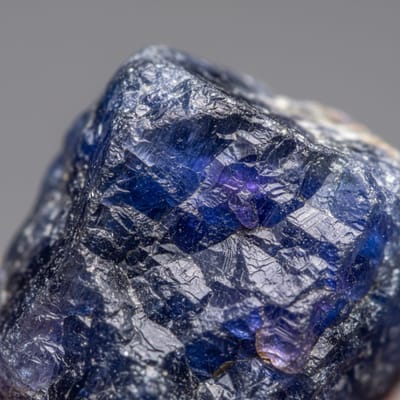
Tanzanite is the blue and violet variety of the mineral zoisite. Its chemical formula is Ca2Al3(SiO4)3(OH). The gem is known for its pleochroism, meaning it displays different colors when viewed from different crystallographic angles. Typically, raw tanzanite appears brownish-red or purplish. However, through heat treatment, this pleochroism is transformed into the desirable violet-blue or deep blue colors that are prized in the jewelry market. Its color is primarily caused by the presence of trace amounts of vanadium within the mineral structure.
Key Features
- Color: The most distinctive feature of tanzanite is its vibrant color, ranging from a medium to deep violet-blue. The most valuable stones exhibit a rich, saturated blue with a hint of violet.
- Trichroism: Tanzanite is strongly trichroic, meaning it exhibits three different colors when viewed from different angles. Usually, these are blue, violet, and yellowish-brown. Heat treatment enhances the blue and violet tones while diminishing the brown.
- Clarity: Like most gemstones, tanzanite is typically eye-clean, meaning it has no visible inclusions to the naked eye. High clarity enhances its brilliance and sparkle.
- Hardness: With a Mohs hardness of 6.5 to 7, tanzanite is moderately durable. While suitable for everyday wear, it requires more care than harder gems like diamonds or sapphires, as it can be susceptible to scratching and chipping.
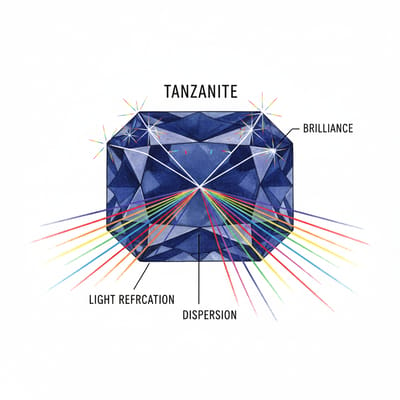
- Brilliance: Tanzanite possesses a good refractive index, giving it a pleasing brilliance and fire, although generally less intense than that of a diamond.
- Rarity: Tanzanite is found in only one location on Earth, making it exceptionally rare. This rarity contributes significantly to its value and appeal.
Origin and History
Tanzanite was discovered in 1967 by Manuel de Souza, a Portuguese tailor and part-time gem prospector, in the Merelani Hills of the Arusha Region in northern Tanzania, near Mount Kilimanjaro. Legend has it that the discovery was made by Maasai herders who stumbled upon the vibrant blue crystals after a fire in the dry savanna. The gem was named tanzanite by Tiffany & Co. executives, who were instrumental in popularizing it worldwide. Before its identification as a new variety of zoisite, the stones were initially mistaken for other blue gems like sapphire. Its discovery revolutionized the colored gemstone market, offering a stunning alternative to sapphires.
Types / Variations
While tanzanite is primarily known for its violet-blue to blue colors, there are some variations, though they are less common and generally less valuable:
- Brownish/Yellowish: Untreated tanzanite often exhibits these colors due to its pleochroic nature. These are not typically desired for jewelry.
- Greenish-Blue: Some tanzanite may show a greenish tinge, especially in certain lighting conditions. This is usually a result of the stone’s orientation or less-than-ideal heat treatment.
- Fancy Colors: Extremely rare occurrences of tanzanite might exhibit different color plays, but the classic blue-violet is the most commercially significant.
The most sought-after tanzanite exhibits a deep, intense blue, often with a violet secondary hue. Color saturation and the purity of the blue are key factors in its desirability.
How It's Made
Tanzanite is a naturally occurring mineral. However, the beautiful blue and violet colors seen in jewelry are almost always achieved through a process called heat treatment. Raw tanzanite crystals extracted from the earth are typically brownish or purplish. By heating these crystals to temperatures around 500-600 degrees Celsius (932-1112 degrees Fahrenheit) for a period of time, the vanadium ions within the crystal structure shift, resulting in the dramatic transformation to the desirable blue and violet hues. This heat treatment is considered a standard and acceptable practice in the gem trade, and it is essential for unlocking the gemstone's full potential beauty. Untreated tanzanite, while rare, is usually less appealing in color.
Grading & Quality Standards
Tanzanite is graded using a system similar to other colored gemstones, focusing on the 4 Cs (Color, Clarity, Cut, and Carat Weight), with an emphasis on Color and Clarity:
- Color: The intensity and hue of the blue and violet are paramount. Stones with a vivid, deep blue with a secondary violet flash are the most valuable. Lighter or more purplish stones are generally less expensive.
- Clarity: Tanzanite is typically found with good clarity. Eye-clean stones (VS or higher) are preferred. Any visible inclusions can detract from the gem's beauty and durability.
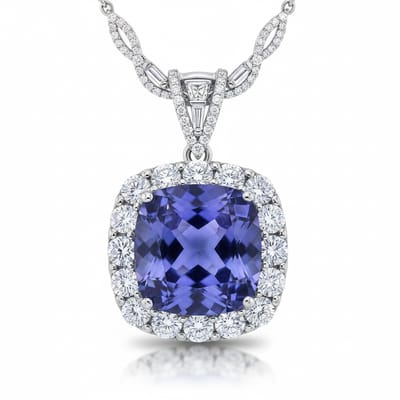
- Cut: The cut of a tanzanite is crucial for maximizing its color and brilliance. Gem cutters often choose cuts that enhance the blue face-up color while minimizing the less desirable brownish pleochroism. Oval and cushion cuts are popular, but step cuts and brilliant cuts are also used.
- Carat Weight: Larger tanzanites are rarer and thus command higher prices per carat. The color tends to be more intense in larger stones.
Reputable dealers will often provide certificates from independent gemological laboratories, though tanzanite is not as rigorously graded by formal systems like the GIA's 4Cs for diamonds, as color is subjective and treatments are standard.
Buying Guide
When purchasing tanzanite, consider the following:
- Color: Look for a vibrant, deep blue with a hint of violet. Avoid stones that appear too purple or too pale.
- Clarity: Opt for an eye-clean stone with no visible flaws.
- Cut: Ensure the cut is well-executed and enhances the stone's color. A poorly cut stone can look dull or appear to have undesirable colors.
- Treatment: Be aware that virtually all tanzanite on the market has been heat-treated. This is standard and should not be a deterrent, but it's good to be informed.
- Source: Authenticity is key. Purchase from reputable jewelers who can provide documentation and guarantee the origin and treatment of the stone.
- Durability: Given its Mohs hardness of 6.5-7, consider how the jewelry will be worn. For engagement rings, a protective setting is highly recommended.
- Price: Compare prices from different sources, but prioritize quality and reputation over the lowest price.
Price Range & Value Factors
Tanzanite prices vary widely based on the 4 Cs, with color being the most dominant factor. High-quality tanzanite, especially stones over 5 carats exhibiting a rich, deep blue-violet, can be quite expensive, rivaling the price of fine sapphires. Smaller stones or those with lighter or more purplish hues will be more affordable. The rarity of the gem, its single source, and ongoing demand also contribute to its value. Prices typically range from a few hundred dollars per carat for smaller, lighter stones to several thousand dollars per carat for exceptional, large specimens with intense color.
Care and Maintenance
Tanzanite requires careful handling due to its moderate hardness and susceptibility to thermal shock and chipping.
- Cleaning: Use warm, soapy water and a soft brush. Avoid ultrasonic cleaners and harsh chemicals, as these can damage the stone or its setting.
- Protection: Store tanzanite jewelry separately to prevent scratches from harder gemstones.
- Settings: For rings, consider bezel or semi-bezel settings that offer more protection to the gemstone's edges. Avoid wearing tanzanite jewelry during activities that could lead to impact or abrasion.
- Avoid Sudden Temperature Changes: Extreme heat or cold can potentially cause the stone to fracture.
Pros and Cons
Pros:
- Stunning Color: Its unique violet-blue hue is captivating and distinctive.
- Rarity: Being mined from a single location adds to its allure and potential investment value.
- Affordability (relative): Compared to other blue gemstones like sapphires, fine tanzanite can offer a more accessible price point for similar visual impact.
- Symbolism: Often associated with spirituality, intuition, and transformation.
- Versatility: Its beauty lends itself well to various jewelry designs.
Cons:
- Durability: With a Mohs hardness of 6.5-7, it is less durable than diamonds, sapphires, or rubies, making it more prone to scratches and chips.
- Treatment Dependence: Almost all commercial tanzanite is heat-treated to achieve its color.
- Single Source: While a pro for rarity, it also makes the supply chain vulnerable to geopolitical or mining issues.
- Susceptibility to Thermal Shock: Sudden temperature changes can potentially damage the stone.
Famous Examples
While tanzanite doesn't have as long a history as some other gems, several notable pieces have been created. Many famous tanzanite pieces are custom-designed, often featuring large, high-quality stones. The beauty of tanzanite has made it a popular choice for modern jewelry designers and collectors seeking unique and striking gemstones.
Common Misconceptions
- Tanzanite is a synthetic gem: Tanzanite is a natural mineral; its color is enhanced by heat treatment, not created in a lab.
- All tanzanite is blue: Untreated tanzanite is typically brown. The blue color is a result of heat treatment.
- Tanzanite is as hard as diamond: Tanzanite has a Mohs hardness of 6.5-7, significantly less than diamond (10).
- Tanzanite is worthless without treatment: While untreated tanzanite is less desirable for jewelry, it is still a natural mineral. Its value is significantly increased by treatment.
Related Terms
- Zoisite
- Gemstone
- Trichroism
- Heat Treatment
- Colored Gemstones
- Tanzania
- Violet Blue Gemstone
- Semi-Precious Stone (though often considered precious due to rarity and value)
FAQs
What is the best color for tanzanite?
The most desirable color for tanzanite is a rich, intense violet-blue. Stones that exhibit a strong blue with a noticeable violet secondary hue are considered top quality.
Is tanzanite suitable for engagement rings?
Yes, tanzanite can be used for engagement rings, but it requires more care than harder gemstones like diamonds or sapphires. A protective setting, such as a bezel setting, is highly recommended to shield the stone from impacts and daily wear.
How can I tell if tanzanite is real?
Real tanzanite will exhibit trichroism (three different colors from different angles) and have a Mohs hardness of 6.5-7. Reputable jewelers will provide certificates of authenticity. Be wary of suspiciously low prices or stones that appear too perfect or lack the characteristic color play.
Does tanzanite fade?
When properly cared for, tanzanite generally does not fade. However, prolonged exposure to strong light or extreme heat can potentially affect its color over time.
Is tanzanite valuable?
Yes, high-quality tanzanite, especially larger stones with intense blue-violet color, can be very valuable and command prices comparable to fine sapphires. Its rarity and single-source origin contribute significantly to its value.