Peridot: The Vibrant Green Gemstone of Joy
Peridot is a fascinating gemstone, renowned for its distinctive olive to lime green color. As the birthstone for August and a gem steeped in history and lore, peridot holds a special place in the world of fine jewelry. Its unique hue and relatively good durability make it a popular choice for a variety of jewelry pieces, from engagement rings to statement necklaces. This guide delves into everything you need to know about peridot, from its geological origins to practical buying advice.
Key Features
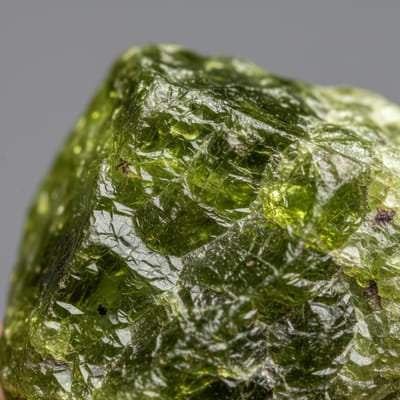
Peridot is a variety of the mineral olivine, which is formed deep within the Earth’s mantle and brought to the surface through volcanic activity or tectonic plate movement. Its characteristic green color is primarily due to the presence of iron within its crystal structure. Unlike many other gemstones, peridot is only found in one color: green. The intensity and shade of this green can range from a pale yellowish-green to a deep olive or even brownish-green.
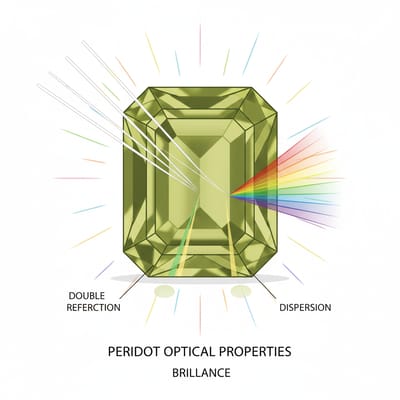
One of the most appealing aspects of peridot is its natural brilliance and sparkle. When cut and polished, it exhibits a good luster. Peridot is also known for its relatively good hardness, ranking 6.5 to 7 on the Mohs scale of mineral hardness. This makes it suitable for everyday wear, though it requires some care to prevent scratching or chipping.
A unique characteristic of peridot is its dichroism, meaning it can appear to have different colors when viewed from different angles. In peridot, this typically manifests as variations of green, yellowish-green, and sometimes even a brownish hue. This property can add depth and complexity to its appearance.
Peridot is also notably pleochroic, meaning it can display different colors or shades of color in different directions of the crystal. For peridot, this is usually observed as distinct shades of green. This characteristic, combined with its inherent brilliance, contributes to its visual appeal.
Another interesting, though less common, characteristic is the presence of certain inclusions. Fine peridot often contains small, needle-like crystals or small, rounded bubbles. However, some peridots can have distinctive inclusions like:
- Chromium-rich inclusions: These can enhance the green color.
- Olivine crystals: These appear as small, darker green or black crystals.
- Phenacite crystals: These are rare but can be found in peridots from specific locations.
The most sought-after peridot color is a rich, medium-toned lime green, often referred to as ‘Persian green’ or ‘Egyptian green’. This vibrant hue is highly desirable and commands higher prices.
Origin and History
Peridot has a long and rich history, dating back thousands of years. Ancient Egyptians revered the stone, which they called the ‘gem of the sun’. They believed it possessed protective powers and used it in amulets and talismans. Historically, much of the world’s peridot was mined on St. John’s Island (Zebirges) in the Red Sea. This source was legendary, producing some of the finest peridot known. However, this deposit is now largely depleted.
The name ‘peridot’ is thought to derive from the Arabic word ‘faridat’, meaning ‘gem’. It was also known by the ancient Greek name ‘chrysolithos’, meaning ‘gold stone’. Throughout history, peridot has been used to adorn the jewelry of royalty and adorn religious artifacts, often mistaken for other green stones like emeralds due to their similar color.
Peridot gained renewed popularity in the 18th century and has remained a favored gemstone for its cheerful color and accessibility. Its association with protection and good fortune has contributed to its enduring appeal.
Types / Variations
While peridot is exclusively green, its color can vary significantly based on the concentration of iron and other trace elements. The main variations are:
- Yellowish-green peridot: Lighter shades, often found in smaller sizes.
- Olive-green peridot: A classic peridot color, deeper and more muted.
- Lime-green peridot: A vibrant, highly prized shade, often associated with exceptional quality.
- Brownish-green peridot: Less desirable, often indicating higher iron content or specific inclusions.
There are no distinct ‘types’ of peridot in the way that diamonds have cuts or emeralds have treatments. The variations are primarily based on color, clarity, and carat weight. Some exceptionally rare specimens may exhibit asterism (star effect), but this is not a common feature.
How It's Made
Peridot is a naturally occurring gemstone, formed deep within the Earth’s mantle under conditions of intense heat and pressure. It is a silicate mineral, specifically a variety of olivine (Mg, Fe)2SiO4. The presence of iron (Fe) is what gives peridot its characteristic green color.
These gems are brought to the Earth’s surface through volcanic activity, such as lava flows, and also through tectonic plate subduction. Occasionally, peridot is also found in meteorites, which are remnants from outer space. These extraterrestrial peridots are extremely rare and highly prized by collectors.
Once peridot crystals are extracted from their geological source, they are sent to cutting and polishing facilities. Here, skilled lapidaries carefully cut and shape the rough crystals to maximize their color, brilliance, and yield. The cutting process is crucial in transforming the rough peridot into a beautiful gemstone ready for jewelry.
Grading & Quality Standards
Like other gemstones, peridot quality is assessed based on the traditional ‘Four Cs’: Color, Clarity, Cut, and Carat Weight. However, for peridot, color is often the most dominant factor.
- Color: The most desirable peridot exhibits a vivid, pure green to yellowish-green hue. Darker or brownish tones are generally less valuable. The intensity and saturation of the color play a significant role.
- Clarity: Peridot is typically eye-clean, meaning inclusions are not visible to the naked eye. However, it commonly features small, needle-like inclusions or gas bubbles, which are often accepted as natural characteristics. Significant inclusions can detract from durability and beauty.
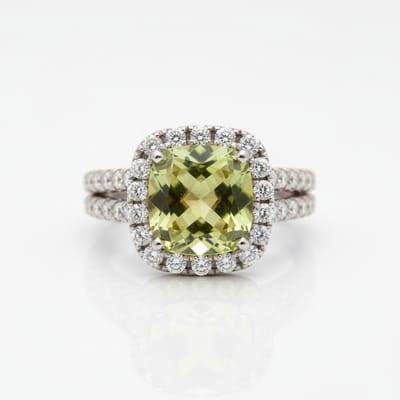
- Cut: Peridot is cut in various shapes, including oval, pear, round, cushion, and emerald cuts. The cut should enhance the gemstone’s natural color and brilliance. Well-cut peridots will display even color distribution and good scintillation.
- Carat Weight: Peridot is available in a wide range of sizes. Larger stones are rarer and therefore more expensive per carat, especially in the most desirable vivid green shades.
The Gemological Institute of America (GIA) does not issue formal grading reports for peridot as it does for diamonds or the ‘precious’ three (ruby, sapphire, emerald). However, reputable jewelers will assess and describe peridot based on these quality factors.
Buying Guide
When purchasing peridot jewelry, consider the following:
- Color: Look for a vibrant green color that appeals to you. Avoid stones with excessive brown or gray tones, as these are less valuable.
- Clarity: Aim for a stone that appears eye-clean. While some natural inclusions are acceptable, large or distracting ones should be avoided.
- Cut: Ensure the cut is well-proportioned, allowing light to reflect evenly and showcase the stone’s brilliance.
- Setting: Peridot’s hardness (6.5-7 Mohs) makes it suitable for most jewelry types, but it is best protected in settings that offer some security, especially for rings. Bezel settings or semi-bezel settings can provide good protection against knocks.
- Source: While historically significant sources like St. John’s Island are depleted, peridot is now sourced from various locations including Pakistan, Myanmar (Burma), the United States (Arizona), China, and Vietnam. The origin can sometimes influence the color and price.
- Certification: While not as common as for other gemstones, if you are purchasing a significant peridot, ask for a certificate of authenticity from a reputable gemological laboratory.
Price Range & Value Factors
Peridot is generally considered an affordable gemstone, making it an excellent choice for those seeking beautiful, natural color in their jewelry without a prohibitive cost. Its price is primarily influenced by its color, size, and clarity.
Color: The most vivid, pure green peridots command the highest prices. Yellowish-green and olive-green stones are more common and less expensive. Brownish tones significantly reduce value.
Size: Larger peridots are rarer than smaller ones, and their price per carat increases with size, particularly for stones over 5 carats. However, even larger peridots remain relatively affordable compared to other colored gemstones.
Clarity: Eye-clean stones with good transparency are more valuable than those with visible inclusions that affect their appearance or durability.
Cut: A well-executed cut that maximizes brilliance and color saturation will fetch a higher price.
Generally, peridot prices can range from as little as $20 per carat for smaller, lighter-colored stones to several hundred dollars per carat for exceptional, large, vivid green specimens. This affordability makes it a popular choice for fashion jewelry and August birthstone gifts.
Care and Maintenance
While peridot is reasonably durable, it requires some care to maintain its luster and prevent damage:
- Avoid Harsh Chemicals: Peridot can be damaged by acids and certain cleaning agents. Do not wear peridot jewelry when cleaning with household chemicals, swimming in chlorinated pools, or applying perfumes and lotions directly onto the stone.
- Protect from Impact: Its hardness of 6.5-7 means it can be scratched or chipped by harder substances. Store peridot jewelry separately to prevent it from scratching other items. For rings, consider settings that offer protection, like bezels.
- Gentle Cleaning: The best way to clean peridot is with a soft brush, warm water, and mild soap. Gently scrub the stone and rinse thoroughly. Pat dry with a soft, lint-free cloth. Avoid ultrasonic cleaners and steam cleaners, as these can cause damage due to heat and vibration.
- Regular Inspection: Periodically check the setting of your peridot jewelry to ensure it is secure and that the stone is not loose.
Pros and Cons
Pros:
- Beautiful Green Color: Its distinctive olive to lime green hue is unique and attractive.
- Affordability: Peridot offers excellent value for its beauty and is accessible in various price points.
- Versatility: Its color complements many metals and styles, making it suitable for diverse jewelry designs.
- Birthstone Significance: It is the traditional birthstone for August, making it a popular gift.
- Good Durability: With a Mohs hardness of 6.5-7, it is suitable for everyday wear with proper care.
Cons:
- Susceptible to Scratches: Can be scratched by harder materials like quartz, topaz, or sapphire.
- Sensitivity to Heat and Chemicals: Can be damaged by extreme heat, strong acids, and certain cleaning solutions.
- Inclusions: Often contains visible inclusions, though this is generally accepted as a natural characteristic.
- Limited Color Range: Only found in shades of green, which may not appeal to everyone seeking a diverse gemstone wardrobe.
Famous Examples
While peridot might not boast the same level of celebrity as diamonds or emeralds, some notable historical and modern examples exist:
- The Imperial Crown Jewels of Austria: These famous jewels feature numerous peridot gemstones, showcasing their historical significance and regal beauty.
- St. John’s Island Peridot: Historically, the finest peridots came from this island, often associated with ancient Egyptian treasures. While no specific famous pieces are universally cited, the quality from this source was legendary.
- Meteoritic Peridot: Extremely rare peridot crystals found in meteorites are highly prized by collectors and museums for their extraterrestrial origin. These are often small but hold immense scientific and collector value.
Common Misconceptions
Misconception 1: Peridot is a fragile stone.
Reality: With a Mohs hardness of 6.5-7, peridot is moderately durable and suitable for most jewelry types when handled with reasonable care. It is not as delicate as some other gemstones.
Misconception 2: All green gemstones are emeralds.
Reality: Peridot is distinct from emerald. Emeralds are a variety of beryl, known for their richer, deeper green color and significantly higher value and hardness (7.5-8 Mohs). Peridot has a unique olive to lime green hue.
Misconception 3: Peridot is only found in one place.
Reality: While St. John’s Island was historically famous, peridot is now mined in various locations worldwide, including the United States, Pakistan, Myanmar, and China.
Related Terms
- Olivine: The mineral of which peridot is a gem-quality variety.
- Mohs Scale: The scale used to measure the hardness of minerals.
- Birthstone: Peridot is the birthstone for August.
- Inclusions: Natural imperfections within a gemstone.
- Dichroism/Pleochroism: The property of a gemstone showing different colors from different viewing angles.
- Luster: The way light reflects off the surface of a gemstone.
FAQs
What is the most valuable color of peridot?
The most valuable peridot color is a vivid, pure green to yellowish-green hue, often described as lime green. The more intense and saturated the green, and the less brown or gray it contains, the more valuable the stone.
Is peridot a hard stone?
Peridot ranks between 6.5 and 7 on the Mohs scale of hardness. This makes it moderately hard, suitable for most jewelry types, but it can be scratched by harder materials. It requires careful handling to avoid damage.
Can peridot be worn every day?
Yes, peridot can be worn every day, especially in protective settings like bezels. However, care should be taken to avoid harsh impacts or contact with abrasive materials and chemicals.
How can I tell if peridot is real?
Real peridot is a natural gemstone with specific characteristics. Look for its unique green color, good clarity (often eye-clean with some natural needle-like inclusions), and a Mohs hardness of 6.5-7. Synthetic peridot exists and is chemically identical but lacks natural inclusions and often has a more uniform color. Glass imitations will feel softer and have a lower refractive index, leading to less sparkle.
Is peridot more valuable than emerald?
No, emeralds are generally significantly more valuable than peridot. Emeralds are considered a precious gemstone with a typically richer color, higher hardness, and greater rarity, especially in high quality. Peridot is a semi-precious gemstone that is much more abundant and affordable.
Can peridot be cleaned in an ultrasonic cleaner?
It is not recommended to clean peridot in an ultrasonic cleaner or with steam. The heat and vibrations can potentially cause damage, especially if the stone has existing fractures or inclusions.