Lapis Lazuli: A Gemstone of Deep Blue and Ancient Allure
Lapis Lazuli is a captivating semi-precious gemstone revered for its intense, deep blue color, often flecked with golden pyrite inclusions that resemble a starry night sky. For millennia, it has been a symbol of royalty, wisdom, and truth, adorning the treasures of ancient civilizations and continuing to be a sought-after gem in fine jewelry today.
Key Features
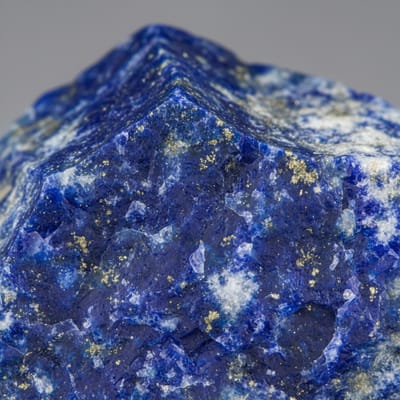
The most striking characteristic of Lapis Lazuli is its vibrant blue hue, which can range from a deep royal blue to a more violet-blue. The presence of pyrite inclusions, appearing as small, glittering brass-yellow flecks, is highly desirable and often mistaken for gold. Calcite streaks, appearing as white or grayish-blue veining, can also be present and affect the stone’s overall appearance and value. High-quality Lapis Lazuli is prized for its uniform, deep blue color with minimal calcite and evenly distributed, fine pyrite crystals.
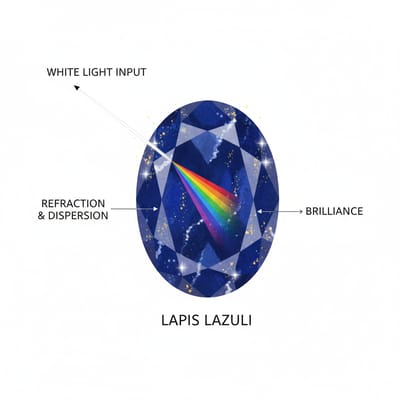
Beyond its aesthetic appeal, Lapis Lazuli possesses a Mohs hardness of 5 to 5.5, making it moderately durable but requiring care to prevent scratching or chipping, especially in rings or bracelets that are prone to wear. It is opaque, meaning light does not pass through it, giving it a rich, solid appearance.
Origin and History
Lapis Lazuli boasts one of the longest histories of any gemstone. Its name is derived from the Latin word ‘lapis’, meaning stone, and the Persian ‘lazward’, meaning blue. Ancient Egyptians, Sumerians, and Mesopotamians prized it highly, associating it with the heavens and the divine.
The most historically significant source of Lapis Lazuli is the remote Badakhshan region of Afghanistan, where mining has taken place for over 6,000 years. This ancient mine continues to be a primary source of high-quality Lapis Lazuli today. The gem was traded extensively along ancient trade routes, reaching as far as Egypt, where it was carved into scarabs, amulets, and inlay for sarcophagi, most famously Tutankhamun’s burial mask.
During the Renaissance, Lapis Lazuli was ground into a powder to create the precious pigment known as ultramarine. This vibrant blue pigment was incredibly expensive, often costing more than gold, and was reserved for the robes of the Virgin Mary and other significant religious figures in paintings.
Types / Variations
While Lapis Lazuli is a rock composed primarily of lazurite, it also contains calcite and pyrite. The balance of these components dictates its appearance:
- Persian Lapis: Often considered the finest quality, characterized by an intense, uniform deep blue color with fine, evenly distributed pyrite inclusions and minimal calcite.
- Russian Lapis: Typically a lighter blue than Persian Lapis, sometimes with more prominent calcite veining, but still highly desirable.
- Chilean Lapis: Usually displays a greener or more intense blue, often with noticeable calcite.
Color variations also exist, but the deep, pure blue with golden pyrite flecks remains the most sought-after.
How It's Made
Lapis Lazuli is a metamorphic rock, not a mineral. It is formed when limestone or marble is subjected to high heat and pressure, often in the presence of sulfur and ammonia. The characteristic blue color comes from the lazurite mineral within the rock. The golden flecks are from pyrite, and the white streaks are calcite. These components are naturally formed together over geological time in specific geological conditions, typically found in mountainous regions.
Grading & Quality Standards
Unlike diamonds, Lapis Lazuli does not have a formal, universally recognized grading system like the 4Cs. However, its quality and value are assessed based on several factors:
- Color: The most important factor. A deep, intense, and uniform blue color is most desirable. Avoid stones with too much white calcite or a greenish hue.
- Inclusions: Fine, evenly distributed pyrite flecks (golden inclusions) enhance value. Too much pyrite can make the stone appear muddy, while too little might be less visually appealing. Calcite streaks (white or grayish veining) generally lower the value.
- Clarity: As an opaque stone, clarity is less about transparency and more about the evenness of color and the aesthetic of the inclusions.
- Cut: Lapis Lazuli is most commonly cut into cabochons (smooth, rounded, domed shapes) because of its opacity and inclusions. It can also be used for beads, carvings, and inlay work. The cut should enhance the stone's color and pattern.
- Treatment: Be aware that some Lapis Lazuli may be treated to enhance its color or to fill fractures. Dyeing is a common practice to deepen the blue, and this should be disclosed by the seller.
Buying Guide
When purchasing Lapis Lazuli, consider the following:
- Color and Pattern: Decide what kind of appearance you prefer. Do you like a uniform deep blue with subtle gold flecks, or a more dramatic pattern with visible calcite?
- Inclusions: Look for pyrite that glitters like stars rather than large, brassy patches. Minimal calcite is generally preferred for a richer blue.
- Origin: While Afghanistan is renowned for its quality, reputable dealers will source from various locations.
- Treatment Disclosure: Always ask if the stone has been treated, particularly dyed, and ensure this information is provided.
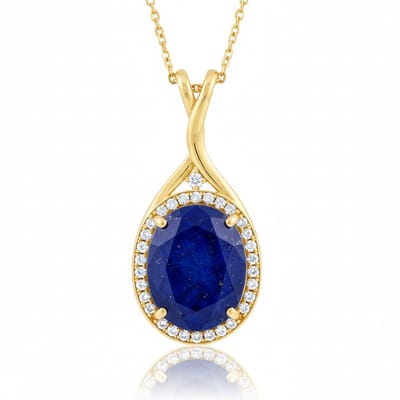
- Setting: Consider how the stone will be set. Due to its moderate hardness, Lapis Lazuli is best suited for jewelry that is less exposed to daily wear, such as earrings, pendants, or inlays, rather than prominent rings or bracelets, unless well-protected.
- Reputable Seller: Purchase from a trusted jeweler who can provide details about the stone's origin and any treatments.
Price Range & Value Factors
The price of Lapis Lazuli can vary significantly based on its quality. Factors influencing price include:
- Color Intensity and Uniformity: The deeper and more uniform the blue, the higher the price.
- Pyrite Presence: A good amount of fine pyrite can increase value, but excessive amounts can detract.
- Calcite Content: Stones with minimal calcite are more valuable.
- Origin: High-quality Lapis from Afghanistan often commands a premium.
- Size: Larger stones in good quality will naturally be more expensive.
- Treatment: Untreated, high-quality Lapis is more valuable than dyed or treated stones.
Generally, Lapis Lazuli is considered an affordable semi-precious gemstone. Prices can range from a few dollars per carat for lower-quality material to potentially hundreds of dollars per carat for exceptional, large, untreated specimens with superior color and distribution of inclusions.
Care and Maintenance
Due to its Mohs hardness of 5 to 5.5 and its porous nature, Lapis Lazuli requires careful handling:
- Avoid Harsh Chemicals: Keep Lapis Lazuli away from acids, alkalis, and harsh cleaning agents, as these can damage the stone.
- Gentle Cleaning: Clean with a soft, damp cloth. Avoid ultrasonic cleaners and steam cleaners, as the heat and vibrations can cause damage.
- Protection from Impact: Store Lapis Lazuli jewelry separately to prevent scratching from harder gemstones. For pieces worn regularly, consider protective settings like bezels.
- Avoid Sudden Temperature Changes: Extreme temperature fluctuations can potentially cause stress or fractures in the stone.
Pros and Cons
Pros:
- Unique Aesthetic: Its striking deep blue color and golden pyrite inclusions offer a distinctive look.
- Rich History: Its ancient origins and cultural significance add to its appeal.
- Affordability: Generally more affordable than precious gemstones.
- Versatility: Suitable for a wide range of jewelry types, especially pendants, earrings, and inlay work.
Cons:
- Moderate Durability: Its Mohs hardness of 5-5.5 makes it susceptible to scratches and chips compared to harder gems like sapphire or diamond.
- Porosity: Can absorb oils and chemicals, potentially affecting its color.
- Treatment Concerns: Many Lapis stones are dyed, which can fade over time and should be disclosed.
Famous Examples
Lapis Lazuli's historical significance is evident in numerous artifacts. The most famous is arguably the funerary mask of the Egyptian pharaoh Tutankhamun, which features extensive inlay of Lapis Lazuli for its eyes and eyebrows, symbolizing the divine cosmos.
Throughout history, Lapis Lazuli has been used in royal regalia, religious art, and decorative objects by various cultures, underscoring its value and perceived mystical properties.
Common Misconceptions
- Lapis Lazuli is Gold: The golden flecks are pyrite, a sulfide mineral, not actual gold.
- All Blue Stones are Sapphire: Lapis Lazuli is an opaque rock, distinct from transparent and much harder gemstones like sapphire.
- Uniform Blue is Best: While a deep, uniform blue is often prized, some collectors appreciate the patterns created by calcite veining and the aesthetic distribution of pyrite.
Related Terms
- Lazurite
- Pyrite
- Calcite
- Ultramarine
- Cabochon
- Semi-precious gemstone
- Afghanistan
- Badakhshan
FAQs
What is Lapis Lazuli?
Lapis Lazuli is a metamorphic rock prized for its intense blue color, often containing golden pyrite flecks and white calcite streaks. It is primarily composed of the mineral lazurite.
Is Lapis Lazuli valuable?
Lapis Lazuli is a semi-precious gemstone. Its value depends on factors like color intensity, the presence and distribution of pyrite, minimal calcite, and whether it is treated. High-quality, untreated Lapis can be quite valuable, but it is generally more affordable than precious gems.
Is Lapis Lazuli a hard stone?
Lapis Lazuli has a Mohs hardness of 5 to 5.5, making it moderately hard. It is softer than many other gemstones and can be scratched or chipped, requiring careful handling and appropriate jewelry settings.
How can I tell if Lapis Lazuli is real?
Real Lapis Lazuli has a distinct deep blue color with natural pyrite inclusions and often calcite veining. Treated Lapis may have a more uniform, intense color or show signs of dye in fractures. A reputable jeweler can help you identify genuine Lapis.
Can Lapis Lazuli be worn every day?
While possible, it is not ideal for everyday wear in pieces like rings or bracelets due to its moderate hardness and susceptibility to scratches and damage from impact or chemicals. Earrings, pendants, or less frequently worn pieces are better suited for daily wear.