Kunzite: The Pink Gemstone of Love and Calm
Kunzite is a relatively modern gemstone, celebrated for its beautiful pink to violet hues. Discovered in the early 20th century, it quickly gained popularity in the jewelry world for its delicate coloration and surprisingly good durability. This guide explores the allure of kunzite, from its geological origins to practical buying advice.
Definition
Kunzite is a transparent to translucent, lilac to pink variety of the mineral spodumene. Spodumene itself is a silicate mineral containing lithium and aluminum. While spodumene can occur in various colors, the gem-quality, pink to violet variety is specifically known and treasured as kunzite. It is sometimes referred to as the 'evening stone' because its color can appear more intense in artificial light.
Key Features
- Color: The most striking feature of kunzite is its spectrum of pinks, ranging from pale pastel pink to a rich, vibrant violet-pink. The intensity of the color is a primary factor in its value.
- Pleochroism: Kunzite exhibits strong pleochroism, meaning it displays different colors when viewed from different angles. Typically, it shows pink or violet along one axis, yellowish or colorless along another, and a deeper pink or violet along the third. Gem cutters often orient the stone to maximize the desirable pink hue.
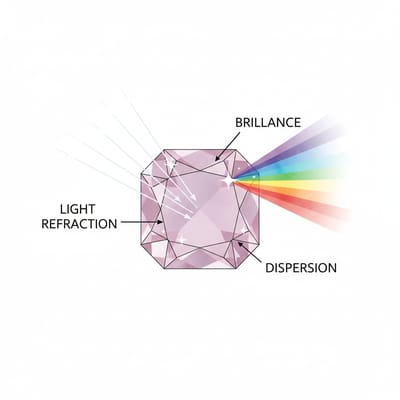
- Luster: When cut and polished, kunzite possesses a vitreous (glass-like) luster, making it sparkle attractively in jewelry.
- Hardness: On the Mohs scale of hardness, kunzite ranks at 6.5 to 7. This makes it reasonably durable for everyday wear, though it requires more care than harder gems like diamonds or sapphires.
- Clarity: Gem-quality kunzite is typically eye-clean, meaning it lacks visible inclusions to the naked eye. Minor inclusions might be present but should not detract from the stone's overall beauty or durability.
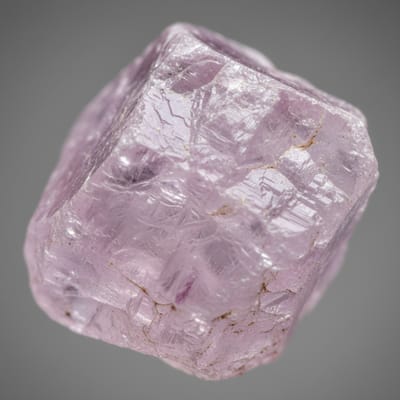
- Crystal Structure: Kunzite forms in prismatic crystals, often found in large sizes, which allows for the creation of sizable gemstone cuts.
Origin and History
Kunzite was first identified and described by American gemologist George Frederick Kunz in 1902. Kunz, who was also the chief jeweler for Tiffany & Co., was fascinated by new and unusual gemstones. The first significant deposits were found in Pala, San Diego County, California. Although California was the initial source, substantial deposits have since been discovered in other parts of the world, most notably in Brazil, Afghanistan, Pakistan, Madagascar, and Mozambique. The gem was named in his honor, recognizing his contributions to gemology and the jewelry trade.
Types / Variations
While kunzite is primarily known for its pink to violet coloration, variations exist primarily based on the intensity and exact shade of these colors. The most prized specimens exhibit a strong, vibrant pink or a rich lilac-violet. Paler stones are still beautiful but generally less valuable. The term 'spodumene' encompasses other gem varieties like hiddenite (a green variety) and triphane (a yellow or colorless variety), but when referring to the pink gem, it is specifically kunzite.
How It's Made
Kunzite is a naturally occurring mineral that forms through geological processes. It is found in lithium-rich pegmatite rocks. These are igneous rocks that form from molten magma that cools slowly, allowing for the formation of large crystals. The presence of trace amounts of manganese is responsible for kunzite's characteristic pink to violet color. Once extracted from the earth, rough kunzite crystals undergo cutting and polishing by skilled lapidaries to bring out their beauty and prepare them for use in jewelry.
Grading & Quality Standards
Like other gemstones, kunzite is evaluated based on several factors, primarily color, clarity, cut, and carat weight. There isn't a universally standardized grading system like the 4Cs for diamonds, but gemologists and jewelers consider these attributes:
- Color: This is the most important factor. Deep, even pinks and vibrant lilacs are most desirable. Stones with a strong, saturated hue are more valuable than pale or unevenly colored ones.
- Clarity: Eye-clean stones with minimal inclusions are preferred. However, since kunzite crystals can be large, it is not uncommon to find stones with some minor internal features.
- Cut: A well-executed cut will enhance the stone's color, brilliance, and overall appeal. Faceted cuts like oval, emerald, and pear shapes are common. Cutters aim to orient the stone to maximize the pink color while minimizing any unwanted yellow or brown tones.
- Carat Weight: Kunzite crystals can be found in large sizes, so larger stones are more common than with some other precious gems. The price per carat generally increases with size, but color saturation remains paramount.
Buying Guide
When purchasing kunzite, consider the following:
- Color Saturation: Look for a vibrant and pleasing pink or violet hue. Avoid stones that appear too pale or have an orangey or brownish tint.
- Clarity: Inspect the stone under magnification if possible, but primarily ensure it appears clean to the naked eye.
- Cut Quality: A well-cut stone will have good symmetry and polish, maximizing its beauty.
- Durability: Remember kunzite's Mohs hardness of 6.5-7. Consider how you will wear the jewelry. For everyday wear, consider protective settings like bezels.
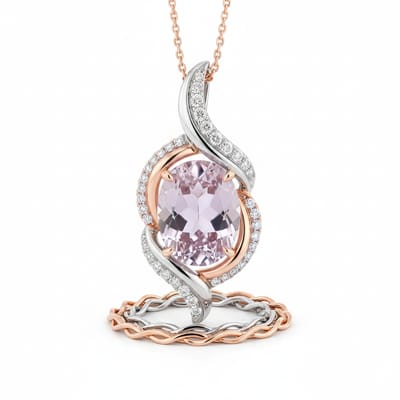
- Setting Material: Kunzite pairs well with various metals. White gold, platinum, and silver complement its cool pink tones, while rose gold can enhance the pink.
- Source and Certification: Reputable jewelers can provide information about the origin of the stone. While not always necessary for kunzite, certification from a recognized gemological laboratory can offer assurance.
Price Range & Value Factors
Kunzite is considered a semi-precious gemstone and is generally more affordable than precious stones like diamonds, rubies, or sapphires. Its value is primarily determined by:
- Color: The intensity and purity of the pink or violet color are the biggest drivers of price. Deep, vibrant colors command higher prices.
- Size: Larger stones are rarer and thus more expensive per carat, assuming comparable quality.
- Clarity: Eye-clean stones are more valuable.
- Cut: A precise and skillful cut enhances beauty and value.
- Treatments: While kunzite is rarely treated, any treatments would affect its value. Most kunzite on the market is natural and untreated.
Prices can range from tens to hundreds of dollars per carat, depending on the quality factors. Exceptional stones with intense color and clarity can fetch higher prices.
Care and Maintenance
Due to its moderate hardness and a tendency to cleave (split along planes), kunzite requires careful handling:
- Avoid Hard Impacts: Protect kunzite jewelry from knocks and bumps, especially against hard surfaces.
- Remove Before Activities: Take off kunzite jewelry before engaging in strenuous activities, sports, or housework.
- Cleaning: Clean gently with a soft brush, warm water, and mild soap. Avoid ultrasonic cleaners and harsh chemicals, as these can damage the stone or its setting.
- Storage: Store kunzite jewelry separately in a soft pouch or a lined jewelry box to prevent scratches from harder gemstones or metal components.
Pros and Cons
Pros:
- Beautiful and desirable pink to violet colors.
- Often available in large sizes, making statement pieces possible.
- Relatively affordable compared to other colored gemstones.
- Complements various metal settings and jewelry styles.
- Associated with positive meanings like love, compassion, and tranquility.
Cons:
- Mohs hardness of 6.5-7 makes it less durable than harder gems for daily wear.
- Susceptible to cleavage, requiring careful handling.
- Color can fade if exposed to prolonged sunlight or heat.
- Pleochroism can sometimes result in less desirable color tones if not cut properly.
Famous Examples
While not as famously documented as some other gemstones, kunzite has been featured in notable jewelry pieces. Its beauty has attracted the attention of jewelry designers and collectors. Many stunning kunzite pieces can be found in private collections and high-end jewelry boutiques, often showcased in elegant rings, pendants, and earrings.
Common Misconceptions
- Treatment: Some consumers assume all colored gemstones are treated. While treatments exist for many gems, fine kunzite is typically found in its natural, untreated state.
- Durability: Because it is a beautiful gem, some may mistakenly believe it is as hard and durable as diamonds. It is important to remember its moderate hardness and care requirements.
- Color Source: People may not realize that the lovely pink color comes from trace amounts of manganese.
Related Terms
- Spodumene
- Hiddenite (green spodumene)
- Triphane (yellow/colorless spodumene)
- Pegmatite
- Lithium
- Manganese
- Mohs Hardness Scale
- Pleochroism
- Lapidary
- Gemology
FAQs
What is the most valuable color of kunzite?
The most valuable colors are deep, vibrant pinks and rich lilacs, especially those with even color distribution. Pale pinks or stones with brownish or yellowish undertones are less valuable.
Is kunzite a hard stone?
Kunzite has a Mohs hardness of 6.5 to 7, making it moderately hard. It is suitable for jewelry but requires more care than very hard gems like diamonds or sapphires to prevent scratches and chips.
Can kunzite fade in the sun?
Yes, prolonged exposure to direct sunlight or strong UV light can cause the color of kunzite to fade over time. It is best to store kunzite jewelry away from direct sunlight when not being worn.
Is kunzite expensive?
Compared to precious gemstones like diamonds, rubies, emeralds, and sapphires, kunzite is relatively affordable. Its price depends heavily on color, clarity, size, and cut quality.
How should I clean my kunzite jewelry?
Clean kunzite gently with a soft brush, warm water, and mild soap. Rinse thoroughly and dry with a soft cloth. Avoid harsh chemicals, ultrasonic cleaners, and abrasive materials.