Iolite: The Water Sapphire for Modern Jewelry
Iolite, often called the 'water sapphire' due to its distinct blue-violet hues, is a captivating gemstone that has gained popularity in the jewelry world. While not as universally recognized as diamonds or sapphires, iolite offers a unique blend of beauty, durability, and affordability, making it an attractive choice for contemporary jewelry designs.
Definition
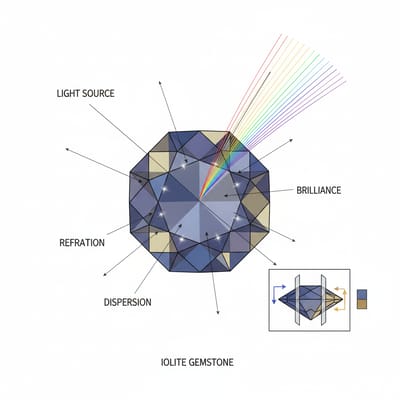
Iolite is a magnesium iron cyclosilicate mineral, specifically a variety of the mineral cordierite. In the realm of gemstones, it is prized for its pleochroic properties, meaning it can display different colors when viewed from different angles. Its name derives from the Greek word 'ion', meaning 'violet', and 'lithos', meaning 'stone'.
Key Features
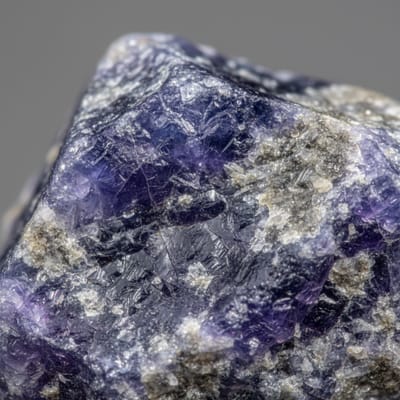
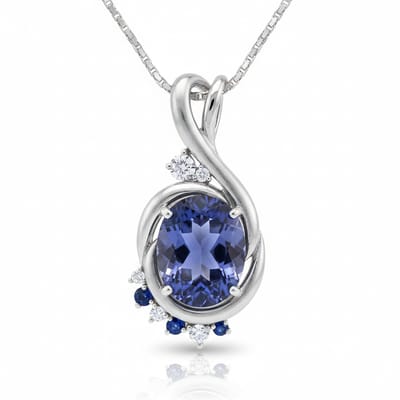
- Color: Iolite typically exhibits shades of blue, violet, and gray-blue. The most desirable color is a pure, rich violet-blue, reminiscent of sapphire. The intensity and hue can vary significantly based on the specimen and its origin.
- Pleochroism: This is iolite's most distinctive characteristic. A single crystal can show a violet-blue face, a paler blue or yellowish-gray face, and a deeper blue face depending on the viewing angle. Skilled lapidaries orient the stone to maximize the most attractive blue-violet color in the face-up position.
- Hardness: On the Mohs scale of hardness, iolite rates between 7 and 7.5. This makes it reasonably durable for everyday wear in jewelry, though it requires care to avoid scratches and chips, especially compared to harder gemstones like sapphire or diamond.
- Clarity: Like most natural gemstones, iolite can contain inclusions. Fine iolite is typically transparent to translucent with minimal visible inclusions, enhancing its brilliance and appeal.
- Luster: Iolite has a vitreous (glassy) to slightly greasy luster.
Origin and History
Cordierite, the mineral group to which iolite belongs, was discovered in the early 19th century. However, iolite as a gemstone was not widely recognized or utilized until much later. Its true potential began to be appreciated in the latter half of the 20th century. Historically, because of its color and pleochroism, iolite has sometimes been mistaken for sapphire and used as a substitute, particularly in earlier times when gem identification was less precise. Ancient Norse explorers are rumored to have used thin slices of iolite as a polarizing filter to locate the sun on overcast days, hence its nickname 'Viking Compass Stone'.
Types / Variations
While iolite is primarily known for its blue-violet shades, the color can range from a pale grayish-blue to a deep violet-blue. There are no distinct named varieties in the way some other gemstones have (like ruby vs. sapphire for corundum). The primary variations are based on the depth and purity of its color and the strength of its pleochroism.
How It's Made
Iolite is a naturally occurring mineral formed through geological processes deep within the Earth. It is found in metamorphic rocks, often associated with schists and gneisses, where aluminum-rich rocks have undergone high-grade metamorphism. The gem-quality iolite is then extracted from these deposits. After mining, the rough stones are cut and polished by lapidaries into faceted gems or cabochons suitable for jewelry. The cutting process is crucial for iolite due to its pleochroism, requiring careful orientation to bring out the best possible color.
Grading & Quality Standards
The quality of iolite is assessed based on the familiar 4Cs, adapted for a semi-precious stone:
- Color: The most important factor. A deep, pure violet-blue is most desirable. Avoid stones that appear too gray or too pale.
- Clarity: Eye-clean stones are preferred. Minor inclusions are acceptable if they don't detract from the overall appearance or durability.
- Cut: A good cut maximizes brilliance and color, effectively displaying the desired blue-violet hue while minimizing any unwanted yellow or gray tones due to pleochroism. Faceted cuts like oval and round are common, but cushions and emerald cuts are also used.
- Carat Weight: Iolite is relatively abundant, and larger stones are more readily available than in some other precious gems. However, size alone does not determine value; the quality of color, clarity, and cut are paramount.
Buying Guide
When purchasing iolite, consider the following:
- Color Preference: Decide on the shade of blue-violet that appeals to you most. Remember that the color can appear to shift slightly depending on the light source and viewing angle.
- Pleochroism: Examine the stone from different angles. A well-cut iolite will show a pleasing violet-blue. If one angle looks too yellow or gray, it might indicate less skillful cutting.
- Clarity: Look for stones that appear clear to the naked eye. Hold the stone up to the light and check for any distracting dark spots or cloudy areas.
- Setting: Due to its 7-7.5 hardness, iolite is suitable for most jewelry types, including rings, pendants, and earrings. However, for rings, a protective setting like a bezel or a raised prong setting is recommended to safeguard the stone from accidental bumps.
- Source: Iolite is mined in several locations, with significant sources in India, Sri Lanka, Madagascar, Brazil, and Africa. Gemstones from different origins may have subtle color variations.
- Certification: While not as common as for precious stones, reputable dealers can provide information about the origin and quality of the iolite.
Price Range & Value Factors
Iolite is generally considered an affordable gemstone. Its price is largely determined by its color intensity, clarity, and the quality of the cut. Larger stones are available at reasonable prices compared to many other gems. You can typically find fine, eye-clean iolite in various cuts and sizes ranging from under $10 per carat to upwards of $50 per carat for exceptional quality stones with a rich, pure violet-blue color and excellent clarity. Its value is primarily aesthetic rather than driven by rarity or speculative markets, making it a great choice for those seeking beautiful, durable, and budget-friendly jewelry.
Care and Maintenance
Caring for iolite is straightforward:
- Cleaning: Use a soft brush, warm water, and mild soap. Gently scrub the gemstone and rinse thoroughly. Dry with a soft, lint-free cloth. Avoid harsh chemicals, ultrasonic cleaners, and steam cleaners, as these can damage the stone or its setting.
- Storage: Store iolite jewelry separately from harder gemstones like diamonds or sapphires to prevent scratching. A soft pouch or a lined jewelry box is ideal.
- Avoidance: Protect your iolite jewelry from sudden temperature changes, harsh impacts, and prolonged exposure to direct sunlight, which can potentially fade its color over time.
Pros and Cons
Pros:
- Attractive blue-violet color that is unique and appealing.
- Reasonable durability (7-7.5 Mohs hardness) suitable for most jewelry.
- Pleochroism adds a dynamic visual interest.
- Generally affordable, offering good value for money.
- Larger stones are more readily available than many other gemstones.
Cons:
- Less durable than harder gemstones like sapphires or diamonds, requiring careful wear.
- Pleochroism can be a challenge to cut effectively, sometimes resulting in less desirable color tones if not handled skillfully.
- Can be prone to chipping or scratching if subjected to rough wear.
- Color can appear too gray or too light if not of high quality.
Famous Examples
While iolite might not boast the same level of famous individual stones as diamonds or rubies, its appeal is consistent in fine jewelry. Its beauty lies in its accessible elegance and the distinct color it brings to pieces. Many exquisite iolite creations can be found in contemporary designer collections, celebrated for their unique hue and the intriguing play of color offered by its pleochroism.
Common Misconceptions
One common misconception is that iolite is a cheap substitute for sapphire. While it shares some color similarities and can be more affordable, iolite possesses its own unique beauty and characteristics, particularly its pleochroism, which sets it apart. It should be appreciated for its own merits rather than as a mere alternative.
Related Terms
- Cordierite
- Pleochroism
- Water Sapphire
- Viking Compass Stone
- Blue Gemstones
- Violet Gemstones
- Semi-precious Stones
FAQs
What is the best color for iolite?
The most desirable color for iolite is a pure, rich violet-blue. Avoid stones that appear too gray, too pale, or too yellow.
Is iolite a hard gemstone?
Iolite has a Mohs hardness of 7 to 7.5, making it reasonably durable for everyday jewelry, but it is softer than gemstones like sapphire or diamond.
How can I tell if iolite is real?
Real iolite will exhibit pleochroism, meaning it shows different colors when viewed from different angles. It should also have a Mohs hardness of 7-7.5. Professional gemological testing can confirm authenticity.
Can iolite be worn every day?
Yes, iolite can be worn every day, but it requires a bit more care than harder gemstones. It is advisable to choose protective settings, especially for rings, and to be mindful of potential impacts or scratches.
Why is iolite called the 'Water Sapphire'?
It is called the 'Water Sapphire' due to its bluish-violet color, which can resemble that of a sapphire, and its association with a watery or serene appearance.