Garnet: A Jewel of Color and History
Garnet, a name that evokes a spectrum of rich, fiery hues, is one of the most fascinating and diverse gemstones used in jewelry. Often associated with the deep red of a pomegranate seed, garnets actually come in a surprising array of colors, making them a versatile and treasured choice for a wide range of jewelry styles. Beyond their aesthetic appeal, garnets boast a rich history and significant geological diversity, contributing to their enduring popularity among collectors and everyday jewelry wearers alike.
Key Features
Garnets are a group of closely related silicate minerals, but when speaking of garnets in jewelry, we typically refer to gemstones that exhibit desirable colors and clarity. The most common garnets are known for their vibrant red shades, but the garnet family is remarkably diverse.
- Color: While red is the most iconic color, garnets can be found in almost every color of the rainbow, including orange, yellow, green, purple, brown, pink, and even colorless. The primary exceptions are pure blue and true black, although some garnets can appear so dark they seem black.
- Hardness: Garnets are relatively hard gemstones, ranking between 6.5 and 7.5 on the Mohs scale of hardness. This makes them durable enough for everyday wear in rings, earrings, necklaces, and bracelets, though they can still be susceptible to scratches and chips from hard impacts.
- Luster: Most garnets exhibit a vitreous (glass-like) to resinous luster, which contributes to their attractive sparkle and brilliance when cut and polished.
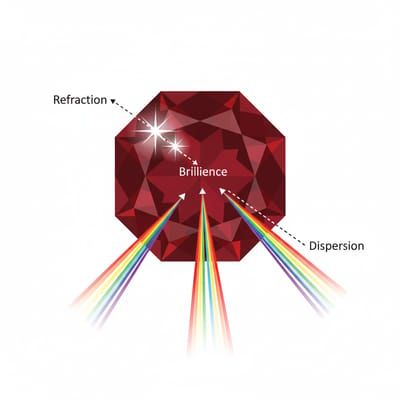
- Refractive Index (RI): Garnets generally have a moderate RI, meaning they have good brilliance but do not typically display the intense fire (dispersion) seen in stones like diamonds or zircons.
- Specific Gravity: Garnets are relatively dense, with specific gravity typically ranging from 3.5 to 4.3, depending on the specific garnet species.
Origin and History
The history of garnets is as colorful as the gemstones themselves. These ancient gems have been prized for thousands of years, appearing in artifacts from the Bronze Age. Ancient Egyptians used garnets as beads and intaglios, and they were popular among Roman nobility for signet rings, often carved with deities or symbols.
The name 'garnet' is derived from the medieval Latin word 'granatus', meaning 'seed-like', likely referring to the deep red color of the common pomegranate. During the Victorian era, garnets experienced a significant surge in popularity, particularly the deep red Bohemian garnets from Bohemia (now part of the Czech Republic). These were often fashioned into elaborate jewelry, including necklaces, brooches, and earrings, and were highly fashionable.
Types / Variations
The garnet group consists of several distinct mineral species, which are further classified into two main series: the pyralspite series and the ugrandite series. Each species possesses unique chemical compositions and, consequently, distinct color ranges and properties.
- Pyralspite Series:
- Almandine: The most common garnet, typically deep red to brownish-red. Its name comes from Alabanda in Asia Minor.
- Pyrope: Known for its rich, deep red to purplish-red color. The name comes from the Greek word 'pyropos', meaning 'fiery-eyed'. This is the garnet often depicted in classic jewelry.
- Spessartine (or Spessartite): Famous for its vibrant orange to reddish-orange hues, often called 'mandarin garnet' when it displays an intense, pure orange color.
- Ugrandite Series:
- Grossular: This series includes a wide range of colors, most notably the green 'tsavorite' and the cinnamon-brown 'hessonite'. 'Grossular' comes from the botanical term for gooseberry, referring to its common green color.
- Tsavorite: A highly prized, vibrant green garnet colored by vanadium and chromium. It is known for its excellent brilliance and durability.
- Hessonite: A yellowish-orange to brownish-red garnet, sometimes called 'cinnamon stone' due to its color. It can sometimes have a characteristic 'wormy' internal appearance.
- Andradite: The most varied garnet species in terms of color and crystal form.
- Demantoid: A rare and highly valuable green garnet, prized for its exceptional dispersion (fire) and vibrant green color, often compared to emerald. It is colored by chromium.
- Topazolite: A yellow to greenish-yellow variety of andradite.
- Uvarovite: A rare emerald-green garnet, usually found in small crystals, often used as an ornamental stone or in parures rather than as faceted gems.
How It's Made
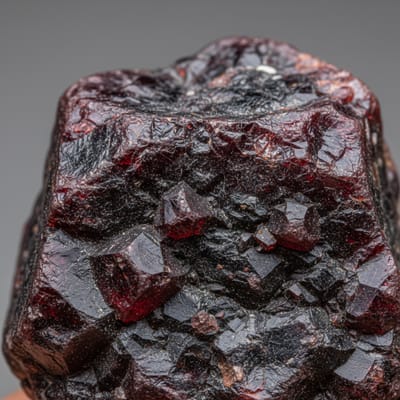
Garnets are natural minerals that form deep within the Earth's crust and upper mantle under conditions of high temperature and pressure. They are typically found in metamorphic rocks such as schists and gneisses, as well as in some igneous rocks and alluvial deposits.
In jewelry manufacturing, rough garnet crystals are carefully selected based on their color, clarity, and size. They are then cut and polished by skilled lapidaries. The cutting process aims to maximize the gem's beauty by optimizing its color, brilliance, and proportions. Common cuts include round, oval, marquise, pear, and emerald cuts. Because garnets are relatively hard and abundant, they are well-suited for various jewelry settings, from delicate pendants to robust rings.
Grading & Quality Standards
Like other precious gemstones, the value of a garnet is determined by the classic '4 Cs' - Color, Clarity, Cut, and Carat Weight - with color often being the most crucial factor.
- Color: The desirability of a garnet's color depends on the specific type of garnet. For instance, a vibrant, pure green tsavorite or demantoid, or a vivid mandarin orange spessartine, will command higher prices than a common brownish-red almandine. Saturation and hue play significant roles.
- Clarity: Most garnets are relatively included, meaning small internal flaws (inclusions) are common. Eye-clean stones (where inclusions are not visible to the naked eye) are highly valued. Some inclusions, like the 'horsetail' inclusions in demantoid garnets, can be characteristic of the species and even add to its desirability for collectors.
- Cut: A well-executed cut enhances the garnet's natural color and brilliance. Poorly cut stones can appear dull or lifeless. The cut should be proportional and free from distracting blemishes.
- Carat Weight: Larger garnets are rarer and thus more valuable, especially for the more desirable species like tsavorite and demantoid. However, the quality of color and clarity can sometimes outweigh sheer size.
Buying Guide
When purchasing garnet jewelry, consider the following:
- Identify the Garnet Type: Knowing the specific type of garnet (e.g., rhodolite, tsavorite, spessartine) will help you understand its typical color and value. Rhodolite garnets, for example, are a mix of pyrope and almandine, known for their beautiful purplish-red to pinkish-red hues.
- Color is Key: Look for a vibrant, pleasing color that is evenly distributed throughout the stone. Avoid stones with excessive browning or dullness.
- Check for Clarity: While some inclusions are expected, aim for a stone that appears clean to the naked eye. Hold the stone up to the light and inspect it closely.
- Examine the Cut: Ensure the gemstone is well-cut, allowing light to reflect evenly and creating a lively sparkle. Watch out for shallow or overly deep cuts that can detract from the gem's appearance.
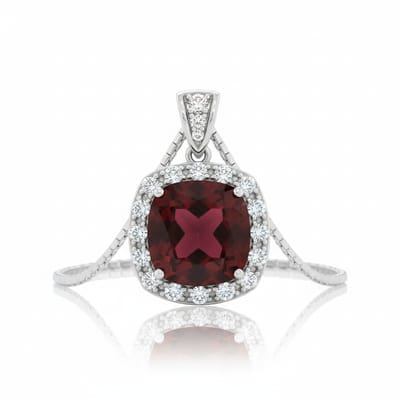
- Consider the Setting: Garnets are suitable for most jewelry types. For rings, especially engagement rings, ensure the setting offers protection for the gemstone, given its Mohs hardness rating. Bezel settings or protective halo settings are good choices.
- Source Reputable Dealers: Purchase from jewelers you trust who can provide details about the gemstone's origin and type.
Price Range & Value Factors
Garnets are generally considered affordable gemstones, especially compared to traditional precious stones like diamonds, rubies, sapphires, and emeralds. However, prices can vary significantly based on the specific type, color, clarity, size, and rarity.
- Common Red Garnets (Almandine, Pyrope, Rhodolite): These are widely available and relatively inexpensive, especially in smaller sizes and average quality. Larger, fine-quality stones with vibrant, saturated color can still be quite valuable.
- Orange Garnets (Spessartine): Mandarin garnets, with their intense pure orange color, are rarer and command higher prices than common red garnets.
- Green Garnets (Tsavorite, Demantoid): These are among the most valuable garnet varieties. Tsavorite, known for its vivid green color and durability, can rival emeralds in price per carat for fine specimens. Demantoid, particularly prized for its exceptional fire, is rare and very valuable, especially in larger sizes.
- Other Colors: Garnets in unusual colors like blue (extremely rare, often color-change) or purple can also be highly sought after and valuable.
The price per carat for garnets can range from under $10 for common varieties in lower quality to several hundred or even thousands of dollars per carat for exceptional tsavorites, demantoids, or rare color-change garnets.
Care and Maintenance
Garnets are relatively durable but require mindful care to maintain their beauty.
- Cleaning: Warm water, mild dish soap, and a soft brush are usually sufficient for cleaning. Avoid harsh chemicals, ultrasonic cleaners, and steam cleaners, as these can damage the stone or its setting.
- Protection: While garnets are hard, they can still be scratched or chipped. Avoid wearing garnet jewelry during strenuous activities, when exposed to harsh chemicals (like household cleaners), or when playing sports.
- Storage: Store garnet jewelry separately from other gemstones and jewelry to prevent scratches. Use a soft cloth pouch or a lined jewelry box.
Pros and Cons
Pros:
- Variety of Colors: Available in nearly every color imaginable, offering immense design flexibility.
- Affordability: Generally more affordable than traditional precious gemstones, making them accessible for various budgets.
- Durability: Sufficiently hard for everyday wear in most types of jewelry.
- Rich History: A gemstone with a long and storied past, adding to its allure.
- Ethical Sourcing: Many garnets are mined in regions where ethical practices are becoming more prevalent, and their widespread availability reduces the risk of conflict sourcing compared to some rarer gems.
Cons:
- Inclusions: Many garnets naturally contain inclusions, which can affect their clarity and value.
- Sensitivity: Can be susceptible to chipping or scratching from hard impacts or abrasion, especially when worn in rings.
- Rarity of Certain Colors: While common in red, certain colors like pure blue are extremely rare and command very high prices.
Famous Examples
While garnets are not as frequently highlighted in famous historical jewels as diamonds or rubies, their presence is notable.
- The Imperial Regalia of Austria: Features numerous large, uncut garnets.
- Victorian Mourning Jewelry: Often incorporated deep red garnets, reflecting the era's somber yet intricate style.
- Bvlgari Serpenti Collection: Modern high jewelry often features tsavorite garnets for their vibrant green color.
Common Misconceptions
Several common myths surround garnets:
- All Garnets are Red: This is perhaps the most widespread misconception. While red is the most common color, the garnet family encompasses a vast spectrum of colors.
- Garnets are Cheap: While common red garnets are affordable, rare varieties like tsavorite and demantoid can be very expensive, rivaling the prices of other precious gemstones.
- Garnets Offer Little Fire: While not as dispersed as diamonds, some garnets, like demantoid, exhibit exceptional fire.
Related Terms
- Gemstone
- Silicate Minerals
- Mohs Scale
- Almandine
- Pyrope
- Spessartine
- Grossular
- Tsavorite
- Hessonite
- Andradite
- Demantoid
- Rhodolite
- Color Change Garnet
- Birthstone (January)
FAQs
What is the birthstone for January?
Garnet is the traditional birthstone for January.
Are all garnets red?
No, garnets come in a wide array of colors, including orange, yellow, green, purple, brown, pink, and colorless. Pure blue is extremely rare.
Are garnets valuable?
The value of a garnet depends greatly on its variety, color, clarity, size, and origin. While common red garnets are affordable, rare green garnets like tsavorite and demantoid can be very valuable.
Is garnet a hard stone?
Garnets rate between 6.5 and 7.5 on the Mohs scale of hardness, making them reasonably durable for jewelry but susceptible to scratches and chips from significant impact.
Can garnets be worn every day?
Yes, garnets can be worn every day, but it's advisable to be mindful of potential impacts and avoid exposing them to harsh chemicals. Rings, especially engagement rings, should ideally have a protective setting.