Diamond: The Ultimate Gemstone for Fine Jewelry
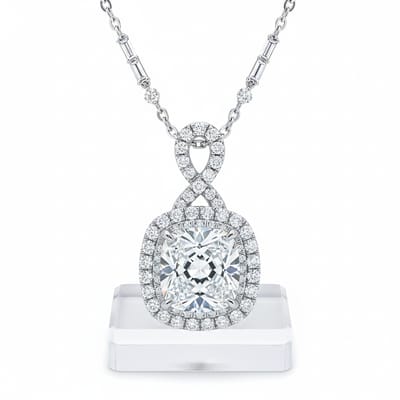
The diamond, a crystalline allotrope of carbon, stands as the most coveted and enduring gemstone in the world of fine jewelry. Renowned for its unparalleled brilliance, hardness, and rarity, diamonds have captivated humanity for millennia, symbolizing love, commitment, and luxury. From ancient adornments to modern masterpieces, the diamond remains the undisputed king of gemstones.
Key Features
The allure of a diamond lies in its unique physical and optical properties:
- Hardness: Diamonds rank a perfect 10 on the Mohs scale of hardness, making them incredibly resistant to scratching and abrasion. This exceptional durability ensures that diamond jewelry can be worn daily and passed down through generations.
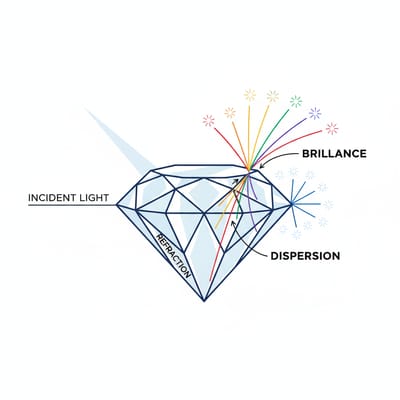
- Brilliance and Fire: A diamond's ability to reflect and refract light is unmatched. Its high refractive index causes light to bounce internally before exiting, creating brilliance (brightness). Dispersion, often called fire, splits white light into spectral colors, resulting in captivating flashes of rainbow hues.
- Luster: The surface of a diamond possesses an adamantine luster, the highest degree of shine, contributing to its exquisite appearance.
- Chemical Composition: Pure diamonds are composed solely of carbon atoms arranged in a cubic crystal structure. Impurities or structural anomalies can affect their color and clarity.
- Thermal Conductivity: Diamonds are excellent thermal conductors, meaning they dissipate heat quickly. This property is often utilized in the diamond trade for testing purposes.
Origin and History
The history of diamonds is as rich and multifaceted as the gems themselves. The earliest evidence of diamond use dates back to ancient India, where they were found in riverbeds and streams. For centuries, India was the sole source of diamonds for the world. Initially, diamonds were prized for their spiritual and protective qualities, believed to ward off evil and bring good fortune. They were also used for engraving and in industrial applications due to their hardness.
The global diamond trade began to expand significantly with the discovery of major diamond deposits in Brazil in the 18th century, and later, in South Africa in the late 19th century. These discoveries dramatically increased the supply and accessibility of diamonds, transforming them from rare curiosities into symbols of wealth and status accessible to a broader population. The establishment of De Beers Consolidated Mines in 1888 played a pivotal role in shaping the modern diamond market.
Types / Variations
While the classic image of a diamond is that of a colorless, sparkling gem, diamonds occur in a spectrum of colors, known as fancy colored diamonds. These color variations are due to trace elements or structural defects within the crystal lattice.
- Colorless Diamonds: These are the most traditional and sought-after diamonds. They are graded on a scale from D (completely colorless) to Z (light yellow or brown). The rarer a diamond is in the colorless range, the more valuable it typically is.
- Fancy Colored Diamonds: These diamonds exhibit distinct hues beyond the normal color range. The most common fancy colors include yellow, brown, pink, blue, green, and red. The intensity and rarity of the color significantly impact their value, often making them far more expensive than colorless diamonds of comparable size and quality. Red diamonds are the rarest of all.
How It's Made
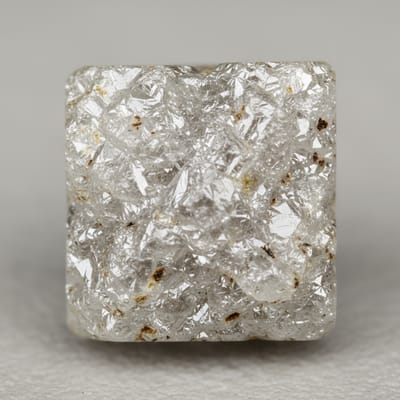
Diamonds are formed deep within the Earth's mantle, approximately 90 to 120 miles below the surface, under conditions of extreme heat and pressure. These conditions cause carbon atoms to bond together in a specific, highly stable crystalline structure. Diamonds are brought to the Earth's surface through volcanic eruptions that create deep-seated pipes, known as kimberlite pipes, which transport the diamonds rapidly from the mantle.
In addition to natural diamonds, there are also lab-grown diamonds. These diamonds are created in a controlled laboratory environment using advanced technological processes, such as Chemical Vapor Deposition (CVD) or High-Pressure High-Temperature (HPHT). Lab-grown diamonds have the same chemical, physical, and optical properties as natural diamonds but are typically more affordable.
Grading & Quality Standards
The quality and value of a diamond are assessed using the universally recognized Four Cs:
- Carat: This refers to the diamond's weight, not its size. One carat is equal to 0.2 grams. Larger diamonds are rarer and thus more valuable.
- Cut: This is arguably the most important C, as it determines how well a diamond reflects light. A well-cut diamond will have exceptional brilliance, fire, and sparkle. The cut encompasses proportions, symmetry, and polish.
- Color: For colorless diamonds, the grading scale runs from D (colorless) to Z (light yellow or brown). The less color a diamond has, the more valuable it generally is within this range.
- Clarity: This measures the presence of internal inclusions (flaws) and external blemishes. The scale ranges from Flawless (FL) to Included (I1, I2, I3). Diamonds with fewer and smaller imperfections are rarer and more valuable.
These Four Cs are assessed by gemological laboratories like the Gemological Institute of America (GIA) and are detailed in a diamond grading report.
Buying Guide
When purchasing a diamond, consider the following:
- Set Your Budget: Determine how much you are willing to spend before you start shopping.
- Understand the Four Cs: Educate yourself on carat, cut, color, and clarity to make informed decisions. Prioritize which Cs are most important to you. For example, some buyers might prefer a slightly larger carat weight over perfect color.
- Choose the Cut: The cut significantly impacts a diamond's sparkle. Round brilliant is the most popular, but consider other shapes like princess, emerald, oval, or pear depending on your preference and the jewelry setting.
- Inspect the Diamond: If possible, view the diamond in person under good lighting. A jeweler's loupe (10x magnification) can help you see inclusions.
- Consider Lab-Grown vs. Natural: Decide whether a natural diamond or a lab-grown diamond aligns better with your values and budget. Both offer beauty and durability.
- Look for a Grading Report: Reputable diamonds, especially those over 0.3 carats, should come with a grading report from a respected laboratory (e.g., GIA, AGS).
- Choose a Reputable Jeweler: Purchase from a trusted jeweler with a good return policy and knowledgeable staff.
Price Range & Value Factors
Diamond prices vary enormously, influenced by the Four Cs, market demand, and the source of the diamond (natural vs. lab-grown). A 1-carat, G color, VS1 clarity, excellent cut natural diamond can range from several thousand to over ten thousand dollars. Lab-grown diamonds of equivalent quality are typically priced 30-70% lower than natural diamonds.
Value factors beyond the Four Cs include:
- Fluorescence: The tendency of a diamond to emit visible light when exposed to ultraviolet (UV) radiation. Strong blue fluorescence can sometimes make a diamond appear hazy, while faint or no fluorescence is generally preferred.
- Brand and Retailer Markup: The reputation of the brand and the retailer can add to the final price.
- Origin: Ethically sourced diamonds and those with a traceable origin may command a premium.
- Rarity of Fancy Colors: As mentioned, rare fancy colored diamonds can be exceptionally valuable, often far exceeding the price of colorless diamonds.
Care and Maintenance
Diamonds are hard, but their settings can be vulnerable. Proper care ensures your diamond jewelry remains beautiful for years:
- Cleaning: Gently clean your diamond jewelry with a soft brush, warm water, and mild dish soap. Rinse thoroughly and dry with a lint-free cloth. Avoid harsh chemicals, ultrasonic cleaners (unless recommended by your jeweler for specific stones), and abrasive materials.
- Storage: Store diamond jewelry separately to prevent scratching other gemstones or metals. Use a soft pouch or a lined jewelry box.
- Professional Inspection: Have your jewelry professionally inspected and cleaned by a jeweler at least once a year to check for loose stones or damage to the setting.
- Avoid Damage: Remove diamond jewelry when performing strenuous activities, cleaning with household chemicals, or applying lotions and perfumes, as these can dull the diamond's sparkle and damage the setting.
Pros and Cons
Pros:
- Exceptional hardness and durability, ideal for everyday wear.
- Unmatched brilliance, fire, and sparkle.
- Universal symbol of love, commitment, and luxury.
- Maintains value over time (especially natural diamonds).
- Available in various cuts, colors, and sizes to suit different tastes and budgets.
- Lab-grown options offer affordability and ethical appeal.
Cons:
- High cost, especially for larger, high-quality natural diamonds.
- Ethical sourcing concerns for some consumers regarding natural diamonds.
- Can be scratched by other diamonds.
- Settings can be damaged or wear down over time.
- Lab-grown diamonds are not considered as rare or valuable as natural diamonds by some collectors.
Famous Examples
Many legendary diamonds have graced history, often associated with royalty and significant events:
- The Hope Diamond: A renowned 45.52-carat deep-blue diamond, famous for its alleged curse and its stunning color, currently housed at the Smithsonian National Museum of Natural History.
- The Cullinan Diamond: The largest gem-quality rough diamond ever found, weighing over 3,100 carats. Cut into several stones, the largest being the Great Star of Africa (530.2 carats), which is part of the British Crown Jewels.
- The Koh-i-Noor Diamond: A legendary 105.6-carat colorless diamond, steeped in history and currently part of the British Crown Jewels. Its origins are debated, but it has been part of the treasures of various Indian, Persian, and Mughal rulers.
- The Pink Star Diamond: A spectacular 59.60-carat internally flawless fancy vivid pink diamond, it holds the record for the most expensive gem ever sold at auction.
Common Misconceptions
- Size equals value: While carat weight is important, a poorly cut or low-quality large diamond can be worth less than a smaller, well-cut, high-quality diamond.
- All diamonds are white: Diamonds come in a wide array of colors, with fancy colored diamonds being exceptionally rare and valuable.
- Diamonds are indestructible: While extremely hard, diamonds can be chipped, fractured, or broken if subjected to a sharp blow or extreme force, particularly along cleavage planes. Their settings can also be damaged.
- Lab-grown diamonds are fake: Lab-grown diamonds are real diamonds, chemically and physically identical to natural diamonds, but created through a different process.
Related Terms
- Mohs Scale
- Kimberlite Pipe
- Four Cs (Carat, Cut, Color, Clarity)
- Inclusions and Blemishes
- Fancy Colored Diamonds
- Lab-Grown Diamonds
- GIA (Gemological Institute of America)
- AGS (American Gem Society)
- Brilliance, Fire, Scintillation
FAQs
What is the hardest substance on Earth?
Diamond is the hardest naturally occurring substance on Earth, scoring a perfect 10 on the Mohs scale.
What is the difference between natural and lab-grown diamonds?
Natural diamonds are formed by geological processes over billions of years deep within the Earth. Lab-grown diamonds are created in a laboratory using advanced technology, resulting in the same chemical, physical, and optical properties. The primary differences are their origin, rarity, and price.
Are diamonds a good investment?
While natural diamonds, particularly rare and high-quality ones, tend to hold their value and can appreciate over time, they are not typically considered a liquid investment like stocks or bonds. Their value depends heavily on market conditions and the specific characteristics of the stone. Lab-grown diamonds are generally not considered an investment due to their increasing production and lower resale value.
Why are diamonds so expensive?
The high cost of natural diamonds is due to several factors: rarity, the challenging and expensive process of mining and discovery, the meticulous grading and cutting process, marketing efforts, and brand perception. Supply is also carefully controlled by major producers.
What does it mean if a diamond has fluorescence?
Fluorescence refers to a diamond's reaction to ultraviolet (UV) light. Some diamonds glow, typically blue, when exposed to UV light. While it doesn't affect the diamond's inherent quality (its grade), strong blue fluorescence can sometimes make a diamond appear slightly hazy or milky, particularly in D-F color diamonds, and can influence its appearance and perceived value.